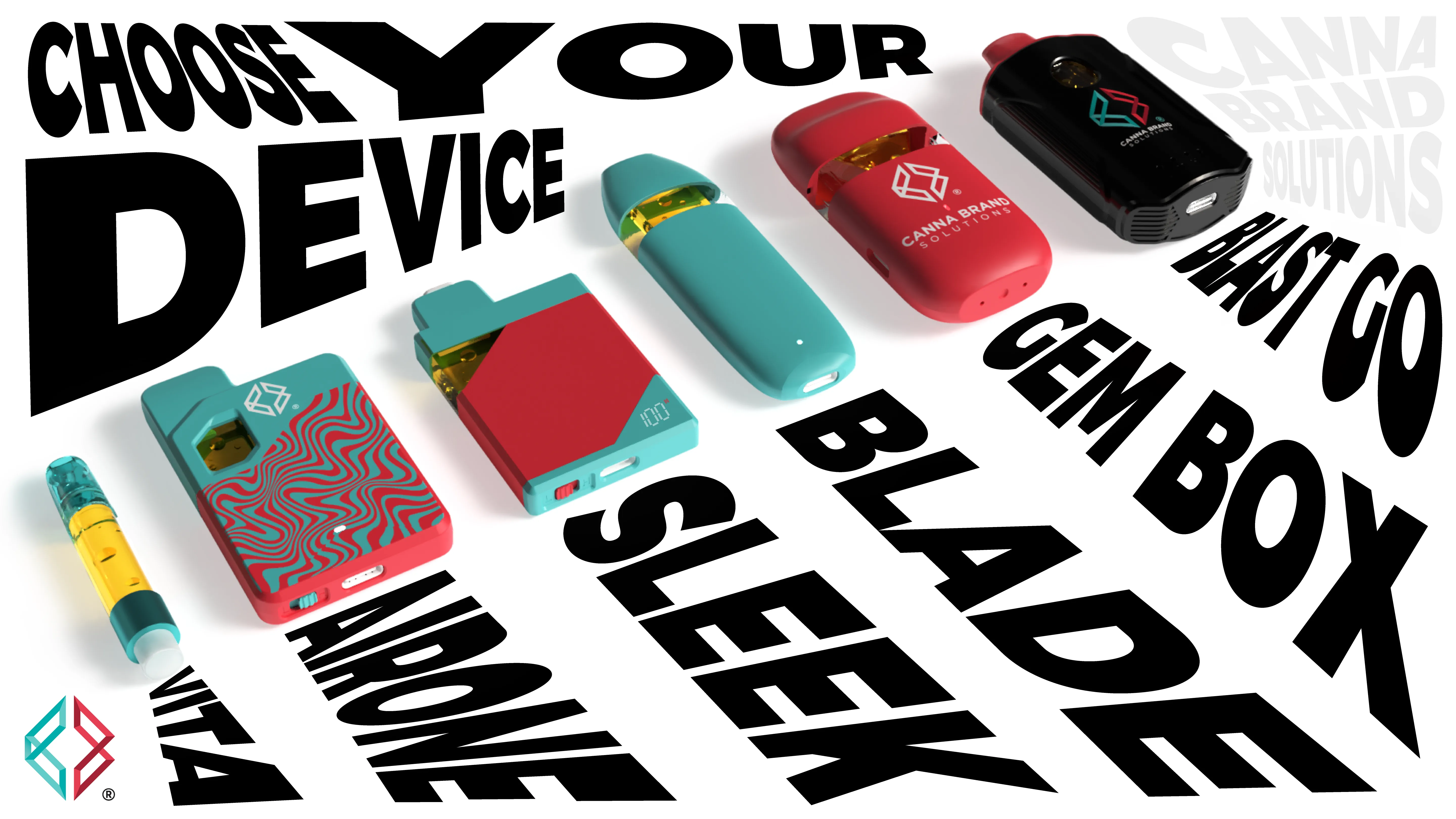



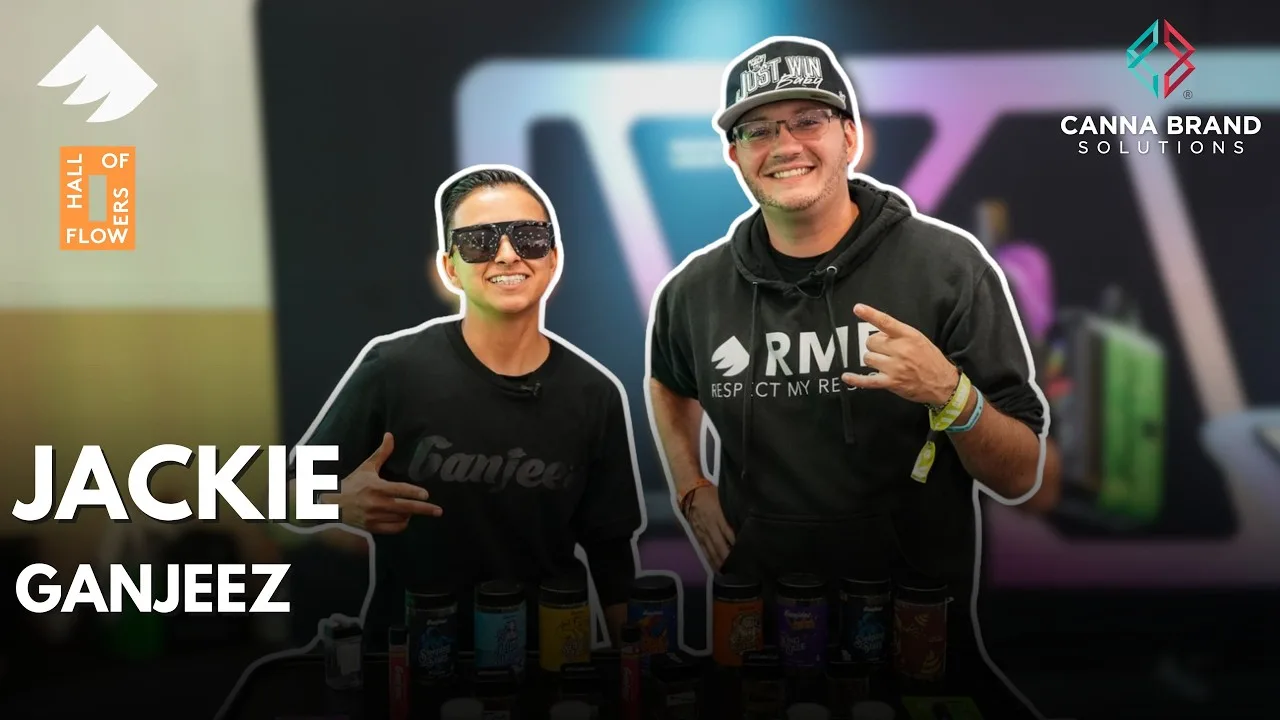

Enjoy this interview series recorded live on the show floor of Hall of Flowers Ventura 2026. Canna Brand Solutions partnered with Respect My Region to spotlight the cultivators, processors, and cannabis brands shaping the market.
In this episode, Respect My Region speaks with Jackie, also known as Jax, Director of Distribution at Ganjeez.
The conversation covers Ganjeez’s vertically integrated operating model, indoor flower, automated pre-roll production, melted-diamond infusion, live resin application, THCA diamond coatings, vape products, strain selection, white-label manufacturing experience, and the company’s focus on creating more consistent finished products.
Watch the full episode here:
Who Is Ganjeez?
Ganjeez is a California cannabis brand offering indoor flower, infused pre-rolls, flower-based products, and melted-diamond vape products.
Jackie explains that the business manages cultivation, manufacturing, and distribution internally rather than outsourcing those functions to separate partners.
This vertically integrated structure gives Ganjeez greater involvement across the product lifecycle, including:
- Indoor cultivation
- Flower selection
- Material preparation
- Pre-roll manufacturing
- Concentrate infusion
- Vape production
- Packaging
- Distribution
For cannabis operators, the value of vertical integration is not simply owning more parts of the supply chain.
Its real value comes from connecting those functions through shared product specifications, quality standards, production planning, and commercial priorities.
When cultivation, manufacturing, and distribution operate in isolation, information can be lost between departments.
When they operate as one coordinated system, the company can respond more quickly to product demand, manufacturing issues, retail feedback, and inventory conditions.
Building Products Around Indoor Flower
Jackie emphasizes that Ganjeez uses indoor flower across its product range.
Indoor cultivation can provide operators with greater control over environmental variables such as:
- Temperature
- Humidity
- Light cycles
- Airflow
- Irrigation
- Nutrient delivery
- Pest management
- Harvest scheduling
That control may help cultivators create more repeatable batches, although consistency still depends on genetics, operating procedures, facility management, post-harvest handling, and employee execution.
For an infused pre-roll brand, the quality and consistency of the flower remain important.
Adding concentrate does not eliminate the role of the base material.
Flower affects:
- Aroma
- Flavor
- Moisture
- Density
- Grind behavior
- Pack consistency
- Airflow
- Burn rate
- Finished-product stability
A premium infusion cannot fully compensate for flower that is excessively dry, inconsistently ground, unevenly packed, or poorly suited to the product format.
The Ganjeez approach reinforces a core product-development principle:
An infused pre-roll should be designed from the flower outward—not built by using concentrate to disguise an inconsistent base.
Using Ground Nugs Instead of Generic Filler Material
During the interview, Jackie explains that Ganjeez uses ground nugs in its pre-rolls.
The flower is processed and packed evenly before concentrate is introduced into the product.
This distinction matters because pre-roll quality can vary significantly depending on the starting material.
A manufacturer may use:
- Whole-flower nugs
- Small buds
- Purpose-selected flower
- Trim
- Shake
- A blend of different materials
Each input has different cost, potency, aroma, moisture, particle size, and manufacturing characteristics.
For brands, the material specification should be defined clearly.
Simply describing a product as “indoor” does not explain:
- Which plant material is being used
- How it is graded
- How it is stored
- How it is ground
- Whether stems are removed
- How particle size is controlled
- How moisture is managed
- How the material is packed
These variables influence both product quality and production efficiency.
Why Grind Consistency Matters
Grinding is one of the least visible but most important steps in pre-roll manufacturing.
If the flower particles are too large, the pre-roll may pack unevenly and create inconsistent airflow.
If the material is ground too finely, it may become overly dense, restrict the draw, or burn poorly.
A mixture containing significantly different particle sizes can also settle unevenly during production.
This may create variation between products from the same batch.
Manufacturers should establish specifications for:
- Grind size
- Particle-size distribution
- Stem content
- Moisture range
- Material density
- Pack weight
- Compression
- Finished draw resistance
Automation works most effectively when the input material is standardized.
A machine can repeat the same motion accurately, but it cannot make inconsistent flower behave like a uniform production input.
Automating the Pre-Roll Production Process
Jackie explains that Ganjeez uses machinery to produce its pre-rolls.
Automation helps the company grind, portion, pack, and infuse products with greater repeatability than a fully manual process may provide at commercial scale.
The purpose of automation should not be limited to producing more units.
A well-designed automated process may also improve:
- Weight consistency
- Pack density
- Infusion placement
- Production speed
- Material control
- Employee ergonomics
- Batch repeatability
- Quality documentation
However, automation does not automatically guarantee quality.
Manufacturers still need to control the materials entering the equipment, validate machine settings, inspect finished units, and monitor performance over time.
The most effective operating model combines automation with trained employees and clearly defined quality standards.
Injecting Pre-Rolls With Melted Diamonds
One of the central topics in the interview is Ganjeez’s use of melted diamonds in infused pre-rolls.
Jackie describes a process in which the flower is ground, packed evenly, and then injected with melted diamond concentrate.
Positioning the concentrate within the pre-roll can help the manufacturer control where the infusion sits relative to the flower.
This is important because concentrate placement influences how the product:
- Draws
- Burns
- Heats
- Produces vapor
- Maintains airflow
- Delivers flavor
- Performs from beginning to end
Infused pre-roll manufacturing is not simply a question of how much concentrate is added.
The location and distribution of that concentrate can be equally important.
Too much concentrate in one area may create uneven combustion, restricted airflow, or a section that burns differently from the rest of the product.
Controlled injection is intended to reduce those differences.
What Are Melted Diamonds?
Cannabis “diamonds” generally refer to highly concentrated crystalline cannabinoid material.
For manufacturing applications, the material may need to be converted into a form that can be measured, transferred, and applied consistently.
In the Ganjeez process described during the interview, the diamonds are melted into an oil-like form before being incorporated into pre-rolls or vape products.
This creates several production considerations.
The material must be controlled for:
- Temperature
- Viscosity
- Homogeneity
- Transfer efficiency
- Dispensing accuracy
- Cooling behavior
- Finished-product stability
Heating the material enough to move through equipment may be necessary, but processors should avoid using more heat or exposure time than required.
The ideal settings depend on the formulation, production equipment, and intended finished product.
Consistent Infusion Is a Product-Engineering Challenge
Jackie identifies consistency as a major priority for Ganjeez.
She explains that the company tries to avoid placing too much oil on one side of a pre-roll and too little on the other.
This is one of the most important challenges in infused pre-roll manufacturing.
Concentrate may move differently depending on:
- Viscosity
- Application temperature
- Flower density
- Pack pressure
- Needle position
- Application speed
- Product orientation
- Cooling time
- Storage temperature
If concentrate is distributed unevenly, one product may perform differently from another even when both contain the same total weight.
Manufacturers should therefore define both a weight specification and a placement specification.
A complete infused pre-roll standard may include:
- Flower weight
- Concentrate weight
- Total finished weight
- Infusion location
- Infusion length
- Flower-to-concentrate ratio
- Pack density
- Draw resistance
- Moisture range
- Acceptable weight tolerance
- Burn-performance criteria
The objective is not only to place concentrate inside a pre-roll.
It is to create repeatable product behavior.
Why Infused Pre-Rolls Can Clog or Burn Unevenly
During the interview, Respect My Region notes that infused pre-rolls can experience performance issues when they are too wet or inconsistently manufactured.
An overloaded or poorly distributed infusion may restrict airflow through the flower.
Potential problems include:
- Difficult draws
- Uneven burning
- Concentrate accumulation
- Oil migration
- Canoeing
- Incomplete combustion
- Excessive residue
- Inconsistent flavor
These issues may be influenced by both formulation and production.
For example, a concentrate that is too fluid may migrate after application. A concentrate that is too thick may be difficult to distribute consistently.
The flower itself may also affect performance.
Material that is packed too tightly can restrict airflow even before concentrate is added.
That is why infused pre-roll development should combine flower specifications, concentrate specifications, equipment settings, and finished-product testing.
Centered Infusion Versus External Coating
The interview describes more than one form of infusion.
Ganjeez injects melted diamonds into the interior of certain pre-rolls. Jackie also discusses production involving an even application of live resin followed by a THCA diamond coating.
Internal and external infusion methods create different product characteristics.
Internal infusion
Placing concentrate inside the pre-roll may help protect it during handling and packaging.
It can also create a more conventional exterior appearance while positioning the concentrate near the flower.
External infusion
Applying concentrate to the outside provides a visible point of differentiation and can support an exterior coating.
However, externally infused products may require additional controls involving:
- Stickiness
- Coating adhesion
- Packaging contact
- Material loss
- Employee handling
- Product appearance
- Storage stability
Neither approach is automatically superior.
The best method depends on the brand proposition, target potency, production equipment, packaging, and desired consumer experience.
Applying Live Resin Evenly
Jackie describes the use of machinery to apply live resin evenly to Ganjeez products.
Uniform application is important because live resin can vary in texture and viscosity.
A spraying or coating process must be calibrated to control:
- Application weight
- Spray pattern
- Product rotation
- Material temperature
- Nozzle distance
- Line speed
- Coverage
- Overspray
- Material recovery
A product that receives too much resin in one area may become difficult to handle or burn inconsistently.
A product that receives too little may fail to meet its potency or product specification.
Manufacturers should measure more than average batch usage.
They should evaluate individual-unit variation.
A batch may consume the correct total amount of concentrate while still distributing it unevenly between products.
THCA Diamond Coatings as Part of the Product Architecture
The interview also highlights Ganjeez products coated with THCA diamonds.
An exterior coating can create a highly visible product presentation, but it must remain attached throughout packaging, distribution, and retail handling.
Processors should consider:
- Particle size
- Coating uniformity
- Adhesion
- Product dryness
- Packaging dimensions
- Vibration during transportation
- Material left inside the package
- Finished appearance at retail
The package becomes especially important for coated products.
A poorly fitted container can rub against the pre-roll and remove material from its surface.
Excess space may allow the product to move repeatedly during shipping.
For infused pre-rolls, packaging should therefore be evaluated as part of product performance—not only as a branding surface.
Quality Control for Infused Pre-Rolls
Infused pre-rolls combine several inputs and production steps.
That increases the number of potential failure points compared with a standard flower pre-roll.
Quality control should address:
Incoming flower
The flower should be inspected for moisture, particle size, aroma, contaminants, and batch suitability.
Concentrate
The concentrate should meet specifications for identity, potency, viscosity, temperature behavior, and formulation consistency.
Production settings
Machine settings should be documented for grinding, packing, infusion, coating, and finishing.
Weight control
Flower, concentrate, and total finished weight should remain within defined tolerances.
Draw testing
Products should be checked for restricted airflow before release.
Visual inspection
Infusion placement, coating, shape, pack density, and exterior condition should be reviewed.
Burn validation
Representative units should be evaluated to identify uneven burning, oil migration, or incomplete performance.
Automation makes these controls easier to repeat, but only when the manufacturer establishes and documents them.
From White-Label Manufacturing to Building Ganjeez
Jackie explains that the company had been involved in white-label manufacturing before developing Ganjeez as its own brand.
White-label production can give a manufacturer valuable experience.
Producing for multiple clients exposes the team to different:
- Product specifications
- Brand requirements
- Packaging systems
- Formulations
- Price points
- Retail expectations
- Production volumes
This experience can reveal which processes are commercially scalable and which product problems appear repeatedly.
For Ganjeez, the move from white labeling into its own brand represents a shift from manufacturing products for others to controlling the complete customer proposition.
The team can apply its production knowledge to:
- Product development
- Naming
- Packaging
- Pricing
- Distribution
- Retail positioning
- Consumer communication
However, operating a brand also introduces responsibilities that do not exist in the same way for a contract manufacturer.
The Difference Between Manufacturing and Brand Building
A capable manufacturer is not automatically a strong consumer brand.
Manufacturing focuses on producing compliant, consistent products at an acceptable cost.
Brand building requires additional capabilities, including:
- Market positioning
- Consumer understanding
- Product architecture
- Packaging design
- Retail sales
- Distribution
- Marketing
- Customer support
- Inventory planning
A manufacturer moving into its own brand must decide why retailers and consumers should choose that brand instead of another product made with similar inputs.
Ganjeez’s emerging proposition appears to combine:
- Indoor flower
- Infused-product expertise
- Melted diamonds
- Automated consistency
- Recognizable strains
- Distinctive packaging
- In-house operations
The long-term opportunity is to translate those manufacturing strengths into a clear and memorable retail story.
Developing a Complete Product Portfolio
The Hall of Flowers display includes several Ganjeez product formats.
These include:
- Indoor flower
- Infused pre-rolls
- Melted-diamond products
- Vape products
- Half-ounce indoor flower and shake formats
A portfolio spanning multiple formats can help a brand reach different retail occasions and customer segments.
However, every category should serve a defined role.
Brands should ask:
- Which product introduces consumers to the brand?
- Which product supports repeat purchasing?
- Which product provides the strongest margin?
- Which product demonstrates manufacturing expertise?
- Which product belongs at an accessible price point?
- Which product represents the premium tier?
Without clear roles, the portfolio may become a collection of unrelated SKUs.
The strongest product systems create a logical path between formats.
Turning Indoor Flower Into a Half-Ounce Format
Jackie discusses a 14-gram indoor flower-based product separated into hybrid, sativa, and indica options.
Larger-format flower and shake products can serve consumers looking for greater quantity and a different price-per-gram proposition.
For vertically integrated companies, these formats may also support more complete use of cultivated material.
Not every portion of a harvest will be positioned as premium whole flower.
Operators must decide how to allocate material across:
- Premium flower
- Small buds
- Pre-rolls
- Infused products
- Extraction
- Shake formats
The commercial goal should be to maximize the value of the crop without creating confusion about quality.
Clear labeling and product positioning are essential.
A value-oriented 14-gram format should not be presented in a way that weakens the perception of the company’s premium flower.
Strain Familiarity and Retail Communication
The interview highlights several familiar and distinctive strain names across the Ganjeez portfolio, including OG-oriented cultivars, Blue Dream, Super Jack, King Lou, Tiger Milk, Venom OG, and other branded selections.
Recognizable strains can help retailers explain products more easily.
Consumers may already associate certain names with particular aroma profiles, genetic families, or product expectations.
At the same time, cannabis brands should avoid relying only on the strain name.
Cultivation conditions, phenotype, harvest timing, formulation, and manufacturing can all influence the finished product.
Retail communication can be strengthened by including:
- Dominant aroma notes
- Product format
- Flower source
- Infusion type
- Cultivar lineage
- Batch characteristics
- Recommended product positioning
This creates a more informative product story than relying exclusively on indica, sativa, or hybrid classifications.
Maintaining Strain Consistency
Jackie explains that Ganjeez is developing its cultivation operation and intends to maintain consistent strain offerings, although popular products may sell out.
This reveals a common tension for vertically integrated brands.
Retailers value consistency because it helps them build repeat purchasing.
Consumers may return looking for the same strain or product they purchased previously.
Cultivation, however, works through biological cycles.
Availability can be affected by:
- Plant performance
- Harvest timing
- Yield
- Testing
- Production capacity
- Demand
- Crop scheduling
- Mother-stock management
A brand that promises permanent availability without sufficient cultivation planning may disappoint retailers.
Operators should separate products into categories such as:
- Core strains
- Rotating strains
- Limited releases
- Seasonal selections
Core products require stronger production forecasting and genetic continuity.
Limited releases can create interest without establishing an expectation of permanent supply.
Avoiding the Cost of Stockouts
Jackie notes that certain products can sell out.
Selling through inventory demonstrates demand, but recurring stockouts can create commercial problems.
When a retailer cannot reorder a product, it may replace the shelf position with another brand.
Repeated gaps can also weaken:
- Retailer confidence
- Sales forecasting
- Promotional planning
- Consumer loyalty
- Distribution efficiency
Vertically integrated operators should connect cultivation planning with retail demand data.
This includes monitoring:
- Sell-through velocity
- Reorder frequency
- Inventory by distributor
- Production lead time
- Cultivation cycle
- Packaging availability
- Testing turnaround
- Forecast accuracy
The goal is not to eliminate every stockout.
It is to understand which products require continuous supply and which are intentionally limited.
Melted-Diamond Vape Products
Ganjeez also presents melted-diamond disposable vape products during the interview.
Jackie explains that the diamonds are converted into an oil form before being filled into the device.
The displayed hardware includes a digital screen and user controls.
The interview references a five-click control and a simplified inhalation function.
For a vape brand, hardware selection directly affects how the formulation is experienced.
The device controls:
- Oil storage
- Heating
- Airflow
- Activation
- Power delivery
- Vapor output
- Remaining-oil utilization
A distinctive exterior can strengthen shelf presence, but the internal performance remains more important than the visual features.
Matching Melted-Diamond Formulations With Hardware
A melted-diamond formulation may behave differently from distillate, live resin, rosin, or a terpene-rich oil.
Brands need to evaluate:
- Viscosity
- Crystallization risk
- Terpene concentration
- Hardware material compatibility
- Oil-intake design
- Coil resistance
- Power output
- Flavor stability
- Storage behavior
The formulation should be tested inside the actual commercial device.
Testing oil separately from the hardware cannot show whether the complete product will leak, clog, wick correctly, or maintain consistent output.
Canna Brand Solutions recommends treating the formulation and device as one integrated product system.
This process should begin before large-scale filling.
Digital Displays and Consumer-Facing Features
The Ganjeez vape shown during the interview includes a visible digital display.
Screens and other electronic features can increase perceived functionality and provide information such as battery status or operating mode, depending on the specific device.
However, each added feature introduces design and quality considerations.
Brands should evaluate:
- Screen visibility
- Battery consumption
- Display accuracy
- Button operation
- User-interface clarity
- Device durability
- Accidental activation
- Packaging instructions
- Failure modes
A feature should solve a real customer problem.
Adding technology only for visual impact may increase cost and complexity without improving the product.
The strongest devices balance appearance, usability, reliability, and formulation compatibility.
Packaging as Part of the Ganjeez Brand Experience
Respect My Region highlights the visual design of the Ganjeez vape products, including the black-and-green presentation and the rich purple treatment used on another device.
Distinctive color systems can help shoppers and budtenders identify products quickly.
They can also separate categories, strains, or product types within the same brand.
A consistent packaging system should make it easy to understand:
- Brand
- Product category
- Strain
- Format
- Weight or fill volume
- Variant
- Required warnings
- Operating instructions
Visual differentiation should not come at the expense of readability.
Cannabis packaging already carries substantial regulatory information. The design system must organize that information clearly while still creating shelf impact.
The Role of Distribution in a Vertically Integrated Company
Jackie serves as Ganjeez’s Director of Distribution, and distribution is included within the company’s in-house operating structure.
Distribution connects production with retail availability.
It influences:
- Inventory movement
- Delivery timing
- Account service
- Product freshness
- Reordering
- Returns
- Data visibility
- Retail relationships
When distribution is managed internally, a brand may gain more direct insight into retailer behavior and inventory conditions.
However, it also assumes the operational responsibilities normally managed by an external distributor.
The company must maintain reliable systems for:
- Order processing
- Route planning
- Inventory accuracy
- Compliance
- Delivery documentation
- Account communication
- Credit management
- Product returns
Vertical integration creates control, but it also concentrates responsibility.
What Cannabis Brands Can Learn From Ganjeez
The Ganjeez interview offers several practical lessons for cultivators, infused pre-roll manufacturers, vape brands, product developers, and vertically integrated operators.
Start infused products with a strong flower specification
Concentrate should enhance the flower—not compensate for inconsistent grind, moisture, density, or material quality.
Control where the infusion is placed
Total concentrate weight is only one variable.
Placement and distribution can affect airflow, burn consistency, flavor, and product performance.
Use automation to improve repeatability
Machines can support consistent packing, injection, spraying, and coating, but they still require controlled inputs and trained operators.
Validate both internal and external infusion methods
Center injection, live resin application, and THCA coatings each create different manufacturing, packaging, and stability requirements.
Treat concentrate temperature as a process parameter
Melted diamonds must be fluid enough to process while avoiding unnecessary heat exposure.
Temperature, viscosity, pressure, and dispensing speed should be validated together.
Define pre-roll quality beyond potency
Draw resistance, burn behavior, pack density, coating adhesion, appearance, and total unit consistency all matter.
Connect cultivation with product demand
Vertical integration can improve supply planning, but only when cultivation schedules are informed by retail sell-through and production forecasts.
Build clear roles for every product format
Flower, half-ounce formats, infused pre-rolls, and vapes should each serve a distinct consumer or retail need.
Match vape hardware to the actual oil
Melted-diamond formulations should be tested in the selected device for wicking, heating, leakage, clogging, and flavor performance.
Use packaging to organize the portfolio
Color and visual identity should help retailers and consumers distinguish between strains, formats, and product tiers.
Convert white-label experience into a brand advantage
Manufacturing experience can support strong product execution, but the company must still communicate a clear reason for the brand to exist.
Consistency Must Be Designed Into the Process
Consistency is a central theme throughout the Ganjeez interview.
It is also one of the most important challenges across infused cannabis production.
Consistency does not come from one machine or one manufacturing step.
It depends on alignment between:
- Genetics
- Cultivation
- Flower processing
- Grind specifications
- Moisture
- Pack density
- Concentrate formulation
- Infusion placement
- Equipment settings
- Packaging
- Storage
- Distribution
If one element changes significantly, the finished product may perform differently.
Brands that want to scale should document the complete process rather than relying on individual employees to make adjustments from experience.
That documentation can include:
- Approved material specifications
- Standard operating procedures
- Machine recipes
- Temperature ranges
- Weight tolerances
- Inspection criteria
- Cleaning procedures
- Batch records
- Finished-product testing
Automation becomes more valuable when it is supported by this process discipline.
The Connection Between Pre-Roll Automation and Vape Manufacturing
Although infused pre-rolls and vape devices are different categories, they share several product-development principles.
Both require manufacturers to control:
- Oil viscosity
- Temperature
- Material transfer
- Dispensing accuracy
- Hardware or format dimensions
- Finished-product stability
- Packaging compatibility
In both categories, the oil cannot be treated separately from the delivery format.
For an infused pre-roll, concentrate must work with the flower, packing density, paper, and product geometry.
For a vape, the formulation must work with the reservoir, intake system, heating element, airflow, and power output.
This systems-based approach helps brands move beyond individual components and focus on complete product performance.
About Hall of Flowers Ventura
Hall of Flowers is a business-to-business cannabis event connecting licensed brands, retailers, cultivators, manufacturers, distributors, buyers, and industry service providers.
The Ventura edition gives California operators an opportunity to introduce new products, meet retail decision-makers, collect market feedback, and evaluate emerging category trends.
Ganjeez used the event to showcase its indoor flower, infused pre-rolls, melted-diamond products, and vape portfolio.
Respect My Region’s on-site interviews capture these conversations directly from the show floor.
Watch More Respect My Region Interviews
Respect My Region is publishing additional Hall of Flowers Ventura interviews featuring cannabis cultivators, extractors, manufacturers, retailers, technology providers, and brand operators.
Follow Respect My Region on YouTube to watch the complete interview series.
Sponsorship Note
This interview is part of Respect My Region’s Hall of Flowers Ventura 2026 coverage. Canna Brand Solutions supported the broader interview series as a sponsor.
Canna Brand Solutions works with licensed cannabis processors and brands on vape hardware, custom packaging, product development, and production support.
For brands developing melted-diamond vape products, the hardware should be evaluated around the actual formulation, including its viscosity, terpene content, thermal behavior, wicking requirements, and intended vapor profile.
For infused pre-roll manufacturers, packaging should also be selected around the finished product’s dimensions, coating, oil content, and handling requirements.
Coordinating formulation, hardware, automation, and packaging early in product development can help reduce leakage, clogging, coating loss, filling inconsistency, and avoidable production changes.
To discuss vape hardware compatibility, production samples, custom packaging, or support for your next product program, contact: