



Enjoy this interview series recorded live on the show floor of Hall of Flowers Ventura 2026. Canna Brand Solutions partnered with Respect My Region to spotlight the cultivators, processors, and cannabis brands shaping the market.
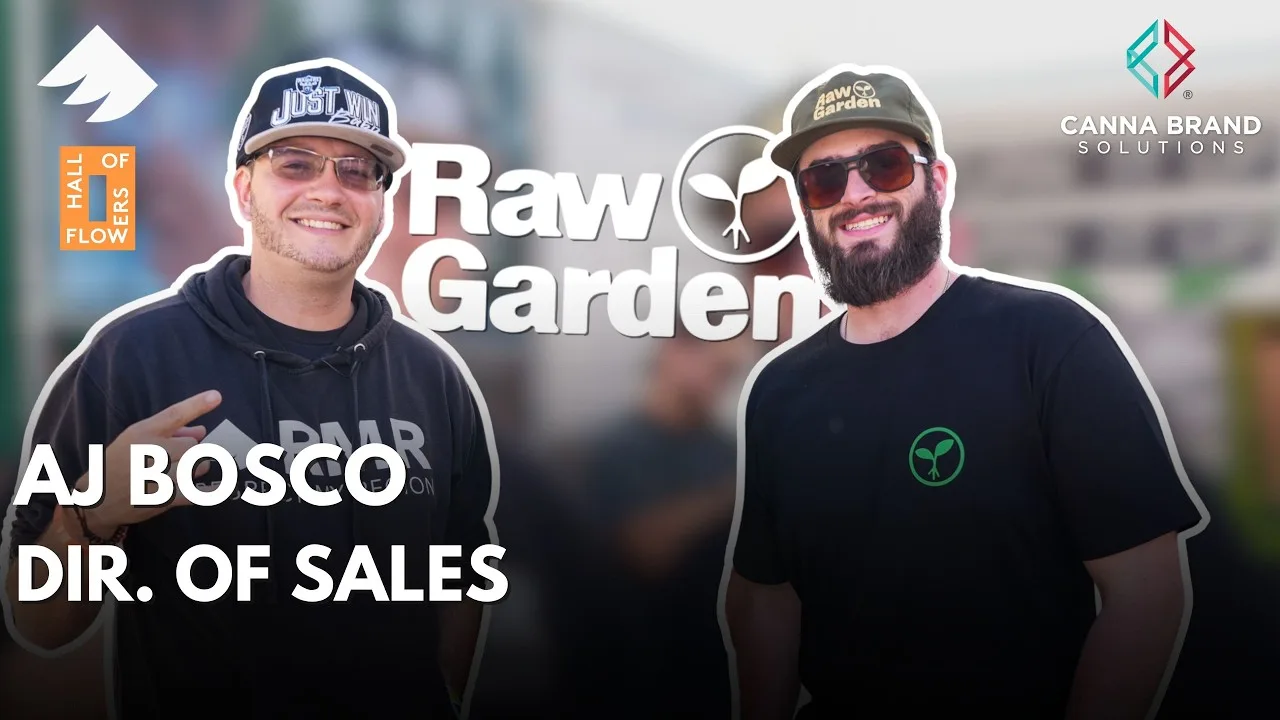
In this episode, Respect My Region sits down with AJ Bosco, Director of Sales at Raw Garden, to discuss refined live resin, single-source cultivation, vape hardware compatibility, flavor variety, infused pre-rolls, the California Love brand, and Raw Garden’s measured expansion beyond California.
Watch the full episode here:
Who Is Raw Garden?
Raw Garden is a California cannabis company known for its live resin concentrates, vape products, broad cultivar selection, and vertically integrated production model.
The company operates from California’s Santa Barbara County, with cultivation and extraction supporting an extensive portfolio of concentrate and vapor products.
During the interview, AJ explains that Raw Garden controls the plant material entering its products. The company grows its own cannabis and processes that material across its portfolio, giving the team greater oversight of cultivation, extraction, formulation, and finished-product quality.
This single-source structure has become an important part of Raw Garden’s identity.
It also gives the company a strong operating foundation for developing multiple product formats without disconnecting the finished product from the source material.
What Is Raw Garden Refined Live Resin?
One of the most important parts of the interview is AJ’s explanation of Raw Garden refined live resin.
The term has generated interest and discussion within the cannabis market, particularly among consumers and retailers trying to understand how it differs from conventional live resin.
AJ explains that Raw Garden begins with a live resin base and removes waxes and lipids from the extract.
The purpose is practical.
For a live resin formulation to perform consistently inside a vape device, its viscosity needs to work with the device’s oil-intake system, heating element, and internal airflow.
Removing excess waxes and lipids helps make the formulation more compatible with vape hardware and can reduce performance issues such as clogging.
The process does not change the importance of the starting material. Instead, it prepares the extract for a specific delivery format.
For cannabis processors, this highlights an important product-development principle:
The formulation and the hardware must be engineered as one complete system.
Why Oil Viscosity Matters in Vape Hardware
Cannabis oil is not a standardized input.
Different extracts can vary significantly in:
- Viscosity
- Terpene concentration
- Cannabinoid composition
- Wax and lipid content
- Flow rate
- Thermal behavior
- Wicking performance
- Storage stability
An oil that performs well in one cartridge or all-in-one device may not behave the same way in another.
If the formulation is too thick for the hardware, it may not move efficiently into the heating area. This can contribute to dry heating, inconsistent vapor production, or clogging.
If the formulation is too thin, it may create leakage, flooding, or excess oil movement.
That is why hardware selection should happen during formulation development—not after the oil has already been finalized.
Processors should evaluate the actual production oil across several areas:
- Oil-intake aperture size
- Heating-element design
- Coil resistance
- Power output
- Airflow
- Filling temperature
- Device orientation during storage
- Leakage resistance
- Clogging performance
- End-of-life oil utilization
Raw Garden’s refinement process demonstrates how formulation decisions can be used to support more reliable device performance.
Hardware Compatibility Is Part of Product Quality
For cannabis brands, the vape device is not simply a container.
It is the mechanism that controls how the formulation is heated, aerosolized, and delivered.
A high-quality extract can still create a poor customer experience when paired with unsuitable hardware.
The consumer does not separate the oil from the device when something goes wrong. Leakage, clogging, restricted airflow, inconsistent output, and unfinished oil are usually experienced as failures of the complete product.
This means hardware compatibility should be treated as part of quality assurance.
Before commercial production, brands should test:
- First-draw activation
- Vapor consistency
- Flavor stability
- Draw resistance
- Oil saturation
- Repeated-use performance
- Clogging after inactivity
- Leakage during transportation
- Storage at different temperatures
- Device performance near the end of oil life
The objective is not only to make the device work during an initial demonstration. It is to create repeatable performance throughout the product’s intended lifecycle.
Building a Large Flavor and Cultivar Portfolio
AJ also discusses the breadth of Raw Garden’s product assortment.
He explains that the company can offer approximately 40 to 50 full-gram vape options, covering a wide range of aroma and flavor profiles.
Those profiles may include:
- Citrus
- Fruity
- Gassy
- Resinous
- Funky
- Rubber-like
- Sweet
- Earthy expressions
This variety gives retailers and consumers more options without requiring them to move away from the Raw Garden brand.
Instead of limiting the portfolio to a small number of permanent SKUs, Raw Garden uses its cultivation and extraction capabilities to present a much broader range of cultivar-driven products.
That creates an important commercial advantage.
A customer who prefers fruit-forward profiles may have very different expectations from someone looking for gas, earth, resin, or stronger fermented characteristics. A broad portfolio allows a brand to serve those different preferences under one recognizable platform.
However, assortment breadth also creates operational complexity.
The Operational Cost of a Broad SKU Portfolio
A portfolio of 40 or 50 vape options can strengthen consumer choice, but it also increases the number of variables a company must manage.
Every additional SKU may affect:
- Cultivation planning
- Harvest scheduling
- Extraction capacity
- Testing and compliance
- Hardware forecasting
- Packaging inventory
- Production scheduling
- Retailer education
- Distributor inventory
- Sales-team training
- Sell-through analysis
The commercial value of a large assortment therefore depends on portfolio discipline.
Brands should understand whether each SKU serves a distinct customer need or simply duplicates another item in the range.
Key questions include:
- Does the product introduce a meaningfully different aroma or flavor profile?
- Does it serve a specific retail price point?
- Is there enough supply to support repeat orders?
- Can the sales team explain its role?
- Does it generate incremental demand?
- Is the product profitable after accounting for operational complexity?
- Does its hardware perform consistently with that specific formulation?
More variety is not automatically better.
The strongest portfolios combine consumer choice with clear SKU roles, reliable production, and disciplined inventory management.
Why Single-Source Production Matters
AJ explains that Raw Garden operates as a single-source company.
The cannabis used in its products is cultivated by Raw Garden before moving through extraction and finished-product manufacturing.
The company’s principal operations are based in Santa Barbara County. AJ describes cultivation under large hoop houses, with plants benefiting from warm daytime temperatures and cooler nights.
This environmental variation can contribute to the plant’s development and resin production.
From a business perspective, the value of single-source production goes beyond ownership.
It can allow a company to exercise greater control over:
- Genetics
- Cultivar selection
- Agricultural practices
- Harvest timing
- Fresh-frozen handling
- Biomass quality
- Extraction inputs
- Batch documentation
- Product specifications
- Supply continuity
For extract-focused brands, the quality of the finished product begins well before extraction.
Cultivation conditions, plant health, harvest timing, freezing procedures, storage conditions, and material handling can all influence the final concentrate.
Great Extracts Start With the Plant
The Raw Garden interview reinforces a recurring lesson across the Hall of Flowers series:
Extraction cannot compensate for poor starting material.
Technology can help preserve, separate, refine, or formulate what is present in the plant. It cannot fully replace the quality that should have been created during cultivation.
For cannabis processors, this means product development should begin with a clear understanding of:
- Cultivar characteristics
- Resin structure
- Trichome development
- Aroma profile
- Expected yield
- Harvest maturity
- Storage requirements
- Extraction suitability
A cultivar that performs well as flower may not necessarily be the strongest candidate for live resin, rosin, or a vape formulation.
The intended finished format should influence cultivation and genetic-selection decisions from the beginning.
From Live Resin Vapes to Infused Joints
Raw Garden used Hall of Flowers Ventura to introduce its refined live resin infused joints.
AJ explains that the material used in these products comes from the same single-source cultivation system supporting the company’s other products.
This shows how a vertically integrated input platform can support expansion into adjacent categories.
A company with dependable access to cultivated material and extraction capacity may be able to develop several formats around the same underlying supply system, including:
- Vape products
- Dabbable concentrates
- Infused pre-rolls
- Other extract-based formats
This can create efficiencies in sourcing, product storytelling, quality management, and brand recognition.
However, each format still requires its own specifications.
An extract prepared for vaporization must satisfy different technical requirements from an extract intended for an infused joint.
The source material may be consistent, but the formulation, application rate, production method, combustion behavior, packaging, and stability standards must be developed for the specific product.
Product Extension Without Losing Brand Consistency
Moving into a new category creates an opportunity to reach new consumers, but it can also dilute a brand when the extension lacks a clear connection to the core product.
Raw Garden’s infused-joint launch remains connected to its broader positioning through the use of the company’s own cultivated material and refined live resin.
For other cannabis brands, the lesson is to evaluate whether a new format strengthens the existing brand promise.
Before entering an adjacent category, teams should ask:
- Does the new product use a capability we already control?
- Will existing customers understand the connection?
- Can we maintain the same quality standards?
- Does the category create incremental demand?
- Is the packaging architecture consistent with the master brand?
- Can production scale without weakening existing products?
- Does the new format require a different hardware or manufacturing partner?
Category expansion should be an extension of a company’s strengths—not simply a reaction to market activity.
Bringing California Love Under the Raw Garden Umbrella
AJ confirms that Raw Garden acquired the California Love brand.
California Love now operates under Raw Garden’s broader company umbrella, using shared operational infrastructure while retaining its role as a separate consumer-facing brand.
Acquiring an established brand can give an operator access to:
- New consumer segments
- Additional retail relationships
- Different product categories
- Alternative price points
- Broader shelf presence
- Shared cultivation or manufacturing efficiencies
- Greater distribution scale
However, acquisitions only create long-term value when each brand has a clearly defined position.
Without clear portfolio architecture, two brands owned by the same company can compete for the same retailers, consumers, price points, and internal resources.
Managing a Multi-Brand Cannabis Portfolio
When a cannabis operator manages multiple brands, each brand should have a specific commercial purpose.
That purpose may be based on:
- Product category
- Price tier
- Consumer profile
- Cultivation philosophy
- Geographic identity
- Retail channel
- Flavor positioning
- Brand personality
The parent company must then decide which capabilities should be centralized.
Shared functions may include:
- Cultivation
- Extraction
- Manufacturing
- Compliance
- Procurement
- Distribution
- Data and analytics
- Finance
- Retail account management
Other elements may need to remain distinct, including packaging, brand voice, product naming, visual identity, and customer proposition.
The objective is to gain operational efficiency without making every brand feel identical.
The Importance of Distribution Infrastructure
AJ notes that Raw Garden and California Love operate through Nabis within California.
Distribution is sometimes viewed as a downstream step that begins after the product has been manufactured. In practice, it is a central part of the brand experience.
Retailers evaluate more than product quality.
They also experience the brand through:
- Inventory availability
- Order accuracy
- Delivery consistency
- Account communication
- Credit management
- Returns processing
- Reorder speed
- Promotional coordination
- Sales and distributor alignment
A product can generate strong initial interest and still lose momentum when retailers cannot replenish it reliably.
For cannabis manufacturers, production planning, sales forecasting, distribution, and retail demand should operate as one connected system.
Expansion Beyond California
AJ explains that Raw Garden is currently active in New Jersey and is evaluating additional state markets.
The company is also observing the broader federal and regulatory environment before determining how quickly to expand.
This measured approach reflects the complexity of interstate cannabis growth.
Although a brand may have strong recognition in California, entering another state is not as simple as shipping the same finished products across state lines.
Each market may have different requirements involving:
- Licensing
- Local manufacturing
- Cultivation
- Testing
- Packaging
- Labeling
- Distribution
- Retail structure
- Product formats
- Potency limits
- Marketing restrictions
- Commercial economics
For an extract and vape brand, expansion also requires the successful transfer of technical standards.
Interstate Expansion Is a Technology-Transfer Challenge
When a cannabis company enters a new state through licensing, partnership, or local production, it must recreate its product within a different operating environment.
That can involve different:
- Cultivation facilities
- Extraction equipment
- Production teams
- Testing laboratories
- Raw-material conditions
- Hardware supply chains
- Filling equipment
- Packaging vendors
- Storage environments
Even when the brand name and package look the same, the operating system behind the product may be completely different.
For vape products, brands should determine whether the new market can consistently reproduce:
- Oil specifications
- Viscosity ranges
- Terpene targets
- Filling parameters
- Hardware compatibility
- Heating performance
- Stability requirements
- Quality-control documentation
Expansion should therefore be treated as a technical transfer—not only as a licensing or sales exercise.
Preserving Brand Standards Across Markets
Before entering a new state, operators should define which elements are non-negotiable.
These may include:
- Approved genetics
- Cultivation specifications
- Extraction methodology
- Formulation ranges
- Hardware platform
- Power settings
- Packaging materials
- Testing procedures
- Quality thresholds
- Batch-release standards
Local adaptations may still be necessary, but they should happen within a controlled framework.
A brand’s reputation can be affected by any market carrying its name. Consumers and retailers are unlikely to distinguish between a problem caused by the parent company and one caused by a local operating partner.
That makes partner selection, training, documentation, and ongoing quality oversight essential.
What Cannabis Brands Can Learn From Raw Garden
The Raw Garden interview offers several practical lessons for cultivators, processors, product developers, retailers, and brand teams.
Formulation and hardware should be developed together
Live resin viscosity, wax content, terpene concentration, and flow behavior can all affect device performance.
Hardware should be selected using the actual production formulation.
Refinement should solve a defined product problem
Raw Garden’s removal of waxes and lipids is connected to a practical objective: improving suitability for vape hardware.
Processing decisions should support a measurable finished-product requirement.
Product quality starts during cultivation
The finished extract reflects genetics, plant health, harvest timing, freezing, storage, and material handling.
Extraction is one part of a larger quality system.
Large assortments require disciplined management
A broad flavor and cultivar portfolio can improve consumer choice, but every SKU increases forecasting, inventory, production, and retail complexity.
Single-source production should create measurable consistency
Vertical integration is most valuable when it results in repeatable specifications, traceability, dependable supply, and stronger quality control.
Category extensions should build on existing strengths
Raw Garden’s infused joints remain connected to its live resin and cultivation platform.
New formats should reinforce the brand rather than dilute it.
Brand acquisitions need clear portfolio architecture
California Love should serve a defined role within the broader Raw Garden portfolio.
Shared infrastructure can improve efficiency, but each brand still needs a distinct customer proposition.
Expansion requires technical replication
Entering a new state involves more than brand licensing. Cultivation, extraction, formulation, hardware, filling, testing, and quality standards must all transfer successfully.
About Hall of Flowers Ventura
Hall of Flowers is a business-to-business cannabis event connecting licensed brands, retailers, buyers, cultivators, manufacturers, distributors, and service providers.
The Ventura edition gives California operators an opportunity to introduce new products, collect retailer feedback, develop partnerships, and discuss market trends directly with industry decision-makers.
Raw Garden used the event to showcase its portfolio and introduce its new refined live resin infused joints.
Respect My Region’s on-site interviews capture these conversations directly from the show floor.
Watch More Respect My Region Interviews
Respect My Region is publishing additional interviews from Hall of Flowers Ventura featuring cultivators, extractors, processors, retailers, cannabis executives, and independent brand operators.
Follow Respect My Region on YouTube to watch the complete interview series.
Sponsorship Note
This interview is part of Respect My Region’s Hall of Flowers Ventura 2026 coverage. Canna Brand Solutions supported the broader series as a sponsor.
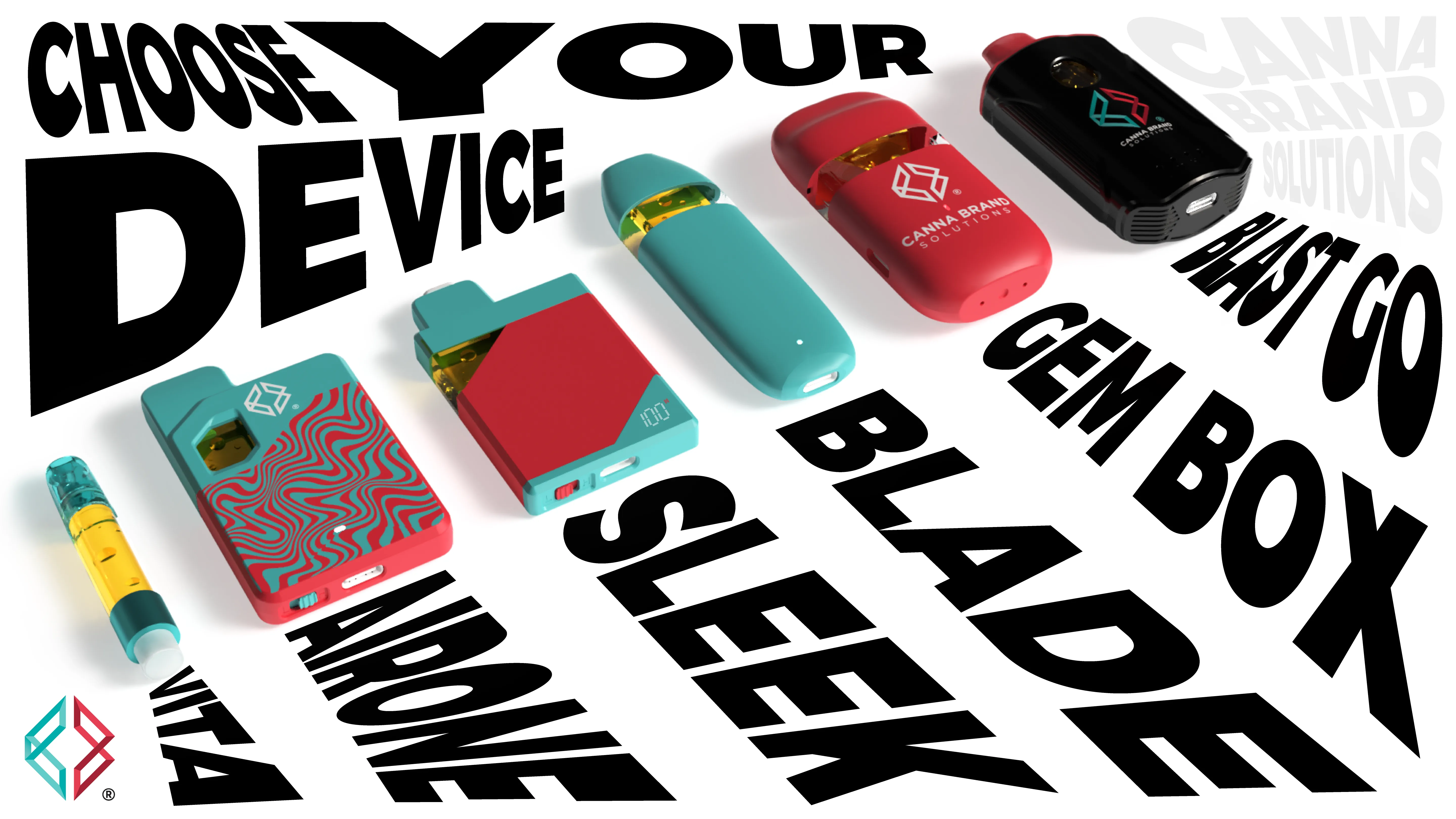
Canna Brand Solutions works with licensed cannabis processors and brands on vape hardware, custom packaging, product development, and production support.
For live resin vape programs, the device should be selected around the viscosity, terpene profile, flow behavior, filling process, and performance requirements of the actual formulation.
Treating hardware as part of the product-development process can help brands reduce leakage, clogging, inconsistent output, and unfinished oil while creating a more dependable experience from the first draw through the end of the device.
To discuss hardware compatibility, samples, custom packaging, or production support for your next vape project, contact: