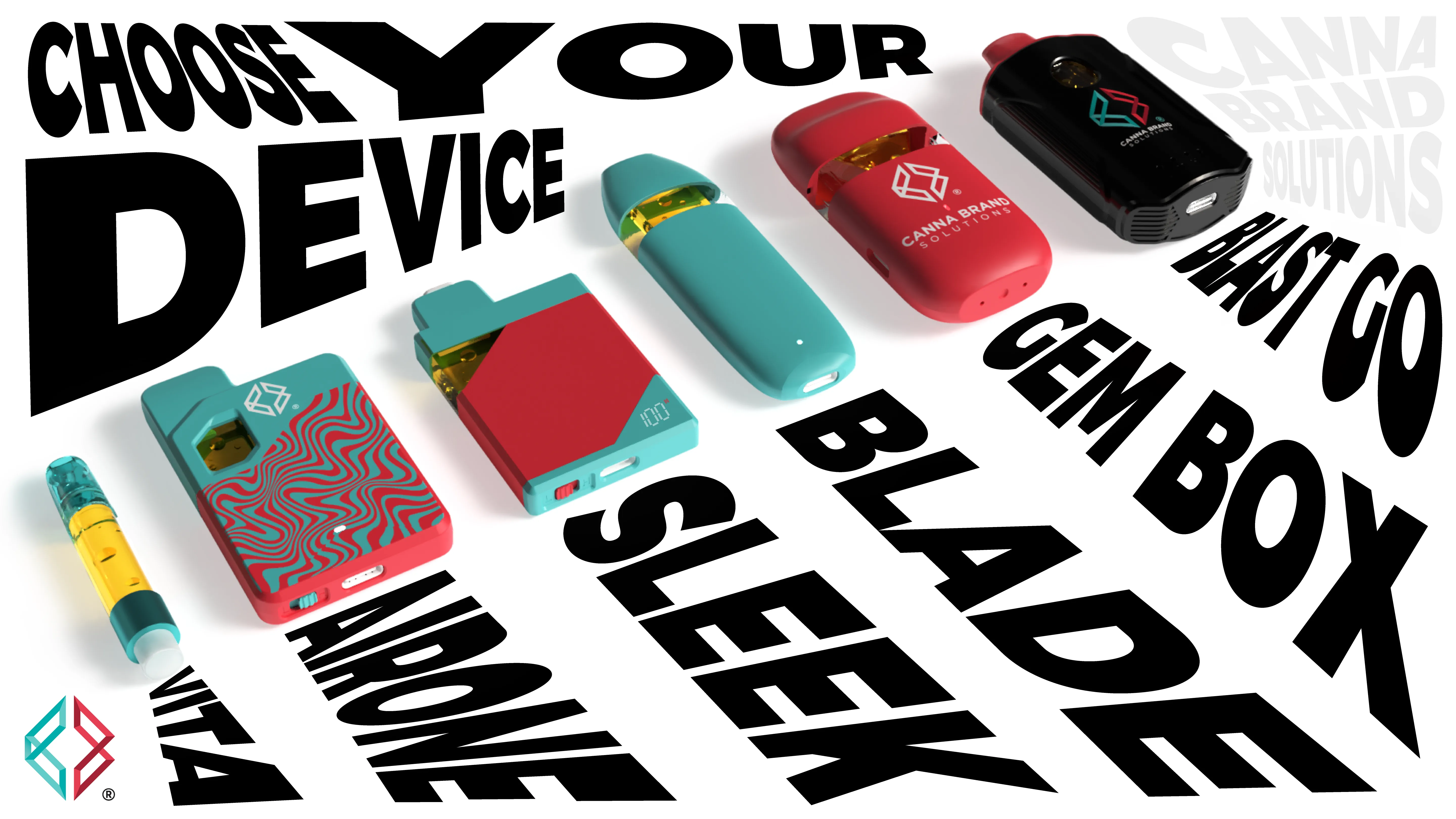



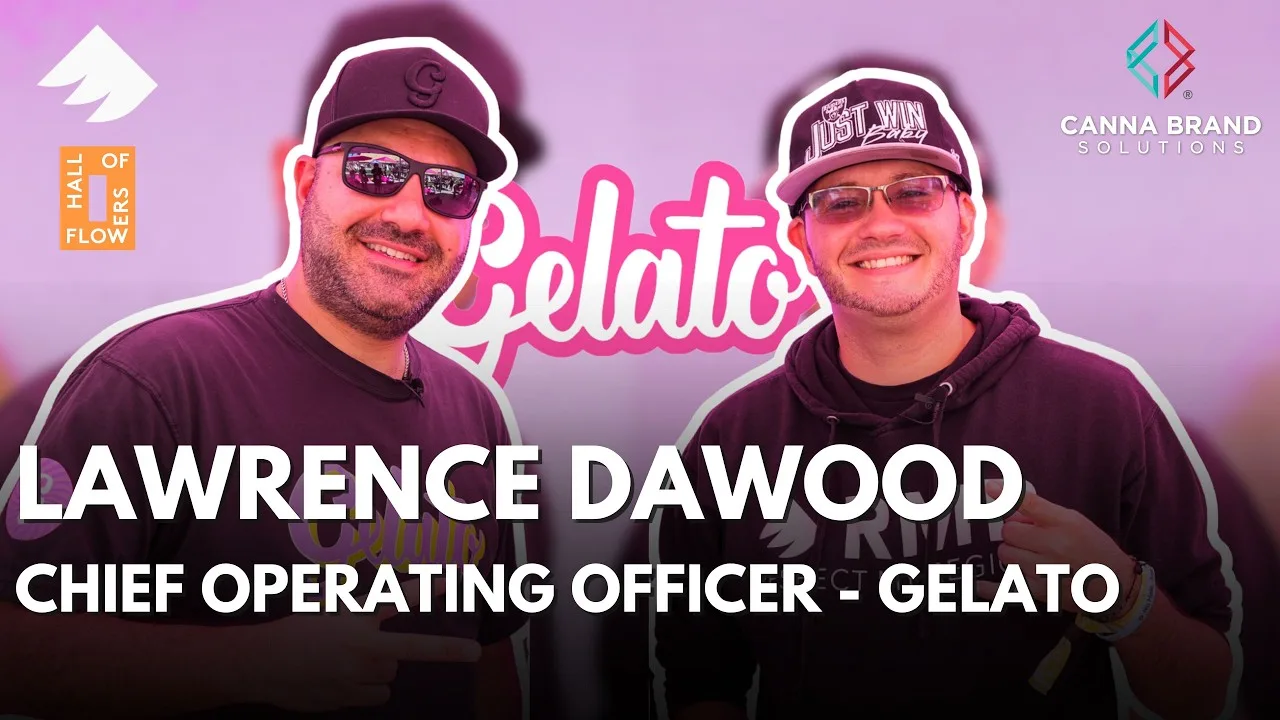

Enjoy this interview series recorded live on the show floor of Hall of Flowers Ventura 2026. Canna Brand Solutions partnered with Respect My Region to spotlight the cultivators, processors, and cannabis brands shaping the market.
In this episode, Respect My Region speaks speaks with Lawrence Dawood, Chief Operating Officer of Gelato, about the company’s transition under new ownership, its multi-state operating experience, flavor-led product development, broad portfolio strategy, and plans for future innovation.
The conversation also explores how Gelato uses Michigan as a product-development and proof-of-concept market before introducing selected products into California and other states.
Watch the full episode here:
Gelato Enters a New Era
Gelato has operated as a recognizable cannabis brand for several years, supported by distinctive packaging, flavor-oriented products, and a broad product assortment.
During the interview, Lawrence explains that the company recently transitioned to a new ownership group.
The incoming team was not unfamiliar with the brand.
Before acquiring Gelato, the group had operated as Gelato’s first licensing partner in Michigan. That relationship gave the team direct experience producing, distributing, and developing the brand within another regulated state market.
As the Michigan operation grew, the relationship with Gelato’s previous ownership developed into an acquisition of the full company.
Lawrence states that the new group officially assumed ownership on January 7, 2026.
This background makes the transaction particularly relevant for cannabis operators.
The acquiring team did not enter as a financial buyer with no operating history. It had already worked with the brand, understood the product portfolio, and had experience translating Gelato into a different state market.
Why Familiar Ownership Transitions Can Be More Effective
Ownership changes can be disruptive.
Employees, retailers, suppliers, consumers, and manufacturing partners may all question whether the brand’s identity or product quality will change.
An acquisition led by an existing licensee can reduce some of that uncertainty.
The incoming team may already understand:
- Brand standards
- Product specifications
- Retail positioning
- Packaging systems
- Manufacturing requirements
- Consumer expectations
- Multi-state licensing challenges
- Existing operational weaknesses
This does not guarantee a successful transition.
However, it can shorten the learning curve and reduce the risk of introducing major changes without understanding what made the brand valuable in the first place.
For cannabis businesses evaluating acquisitions, the Gelato transition highlights an important principle:
The strongest buyer may be the operator that already understands how the brand performs in the market.
Protecting Brand Equity During an Acquisition
Lawrence recognizes the work completed by Gelato’s previous ownership team.
That acknowledgment is strategically important.
When a company changes ownership, the new team must balance two objectives:
- Preserve the equity already created
- Introduce the operational changes required for future growth
Changing too little may allow existing problems to continue.
Changing too much may remove the characteristics that made the brand recognizable.
A structured transition should identify:
- Which products have the strongest customer loyalty
- Which visual assets are essential to brand recognition
- Which retailer relationships must be protected
- Which manufacturing systems require improvement
- Which SKUs should remain unchanged
- Which new products can signal the next phase of the company
- Which parts of the organization need stronger processes
The objective is not to rebuild everything.
It is to determine which parts of the business should be protected, improved, expanded, or discontinued.
The First 60 Days Under New Ownership
At the time of the interview, Lawrence explains that the new ownership group had been operating the company for approximately 60 days.
The first several months after an acquisition are often focused on stabilization.
A cannabis company may need to review:
- Licenses
- Supplier agreements
- Manufacturing relationships
- Inventory
- Retail accounts
- Distribution arrangements
- Product profitability
- Packaging inventory
- Employee responsibilities
- Cash-flow requirements
- Compliance systems
At the same time, the company must continue producing and selling products.
This creates a difficult operational balance.
The new team needs enough urgency to correct immediate issues without creating unnecessary disruption across the business.
Participating in Hall of Flowers shortly after the ownership transition also gives Gelato an opportunity to communicate continuity while introducing new energy around the brand.
Michigan as an Innovation and Proof-of-Concept Market
One of the most important insights from the interview is Gelato’s use of Michigan as a product-development market.
Lawrence explains that much of the company’s innovation and research and development originates in Michigan.
Products can be introduced, evaluated, and refined there before selected concepts are transferred into California.
For a multi-state cannabis company, this can create several advantages.
A functioning state operation provides access to real information involving:
- Production feasibility
- Consumer demand
- Retail feedback
- Pricing
- Sell-through
- Packaging performance
- Manufacturing cost
- Product stability
- Repeat purchasing
This is more valuable than developing a product based only on internal assumptions.
A concept that performs well in one market can move into another state with stronger evidence behind it.
However, the product cannot simply be copied without adaptation.
Why Cannabis Product Innovation Is State Specific
Cannabis remains regulated primarily through individual state systems.
A product developed in Michigan may need to be recreated by a different cultivation, manufacturing, testing, distribution, and retail network in California or Arizona.
Differences may include:
- Raw-material availability
- Manufacturing equipment
- Ingredient requirements
- Potency limits
- Testing standards
- Packaging rules
- Labeling requirements
- Consumer pricing
- Retail margins
- Distribution costs
The commercial concept may transfer, but the operating process must be validated again.
Multi-state brands should document the product thoroughly before expansion.
That documentation may include:
- Formulation specifications
- Approved ingredients
- Production procedures
- Target flavor profile
- Filling parameters
- Hardware requirements
- Packaging dimensions
- Quality tolerances
- Batch-release criteria
This allows a product developed in one state to be reproduced more consistently in another.
Turning Proof of Concept Into Technology Transfer
Gelato’s Michigan-to-California development model illustrates the difference between a successful idea and a transferable product system.
A product is not truly scalable until another team can reproduce it.
For manufacturers, technology transfer should include:
- A complete bill of materials
- Approved vendors
- Product-contact specifications
- Process temperatures
- Mixing or filling procedures
- Equipment settings
- In-process quality checks
- Finished-product standards
- Packaging instructions
- Storage requirements
Without this information, each state operator may develop its own interpretation of the product.
Over time, that can create significant variation under the same brand name.
The consumer may see the same Gelato identity in multiple states, but the internal production systems can be completely different.
That makes documentation and quality oversight essential.
Building a Product Portfolio Across Multiple Categories
Lawrence describes Gelato as one of a limited number of brands with at least one SKU in nearly every major consumable cannabis category.
The portfolio discussed during the interview includes:
- Flower
- Ready-to-roll flower
- Eighth-ounce flower
- 14-gram jars
- One-gram pre-rolls
- Last Bite cones
- Diamond-infused products
- Dipped-and-dusted products
- Vape cartridges
- All-in-one vapes
- Flavor applicators
A broad portfolio gives Gelato several ways to reach retailers and consumers.
It may also allow the brand to serve different:
- Price points
- Product occasions
- Experience levels
- Retail formats
- Consumer preferences
However, category breadth introduces substantial complexity.
Every additional product type may require different manufacturing capabilities, packaging, compliance reviews, sales materials, inventory controls, and retail education.
The Difference Between Portfolio Breadth and Portfolio Strength
Having products in many categories does not automatically create a strong portfolio.
The real question is whether each product has a defined strategic role.
Brands should understand:
- Which SKU attracts new customers
- Which SKU drives repeat purchasing
- Which SKU provides the highest margin
- Which SKU creates retail differentiation
- Which SKU demonstrates innovation
- Which SKU supports brand awareness
- Which SKU should be considered seasonal or limited
Without clear roles, a broad portfolio can become difficult to manage.
It can also create internal competition when multiple Gelato products target the same consumer, price point, or retail shelf.
Portfolio reviews should therefore assess more than sales volume.
Brands should also evaluate:
- Contribution margin
- Inventory turnover
- Retail reorder rate
- Production complexity
- Packaging commitments
- Promotional support
- Cannibalization
- Long-term brand relevance
The objective is to build a connected product architecture rather than a collection of unrelated SKUs.
Innovation as a Core Part of Gelato’s Positioning
Lawrence describes innovation as central to Gelato’s strategy.
The company aims to introduce formats and flavor profiles that feel different from standard flower, pre-roll, and vape offerings.
This is important in a crowded cannabis market.
Many brands compete using similar:
- Cultivars
- Hardware formats
- Package sizes
- Potency claims
- Product categories
Innovation can create differentiation, but only when the product solves a real consumer or retail need.
A new format should improve at least one meaningful variable, such as:
- Convenience
- Flavor
- Portability
- Customization
- Consistency
- Shelf impact
- Product occasion
- Ease of explanation
Novelty may generate an initial purchase.
Repeat purchasing depends on whether the product delivers a dependable experience.
Last Bite Cones and Experience-Led Product Design
One of Gelato’s best-known products is the Last Bite cone.
During the Hall of Flowers activation, the company presented non-infused samples alongside an ice cream experience to demonstrate the flavor and concept.
Lawrence describes Last Bite cones as one of Gelato’s leading products.
The company has developed more than 20 flavors in Michigan and is working to expand the flavor range in additional markets.
A horchata-inspired version is highlighted as a newer flavor.
The format demonstrates how a component that is normally treated as functional—the end of a pre-roll—can become part of the product experience.
Instead of allowing the final portion to feel like an afterthought, the brand turns it into a recognizable feature.
This provides a useful lesson for product developers:
Innovation does not always require rebuilding the entire product. Sometimes it comes from improving a small moment within the experience.
Flavor Development as a Brand Platform
Gelato positions itself as a flavor-forward brand.
That positioning is reflected in its product names, packaging, booth activation, and range of nontraditional flavor profiles.
The brand’s “Savor the Flavor” message provides a unifying idea across several product categories.
A strong flavor platform can support:
- Product naming
- Packaging architecture
- Retail education
- Event activations
- Seasonal releases
- Cross-category extensions
- Consumer recognition
However, flavor-led portfolios require careful execution.
Brands should define how flavor is created and controlled across different formats.
For example, flower, a pre-roll, a vape, and a flavored cone may each deliver flavor through different materials and mechanisms.
The experience should remain recognizable without forcing every product to taste identical.
Managing Flavor Consistency Across States
Flavor replication can be difficult in a multi-state cannabis system.
Even when a product uses the same name, differences in formulation, raw materials, processing, or suppliers may change the final result.
Brands need to define objective and sensory standards.
These may include:
- Approved flavor ingredients
- Terpene specifications
- Aroma targets
- Sweetness or intensity range
- Color
- Viscosity
- Stability
- Ingredient compatibility
- Sensory reference samples
A written formula alone may not be sufficient.
Sensory evaluation can help determine whether different production facilities are delivering a similar experience.
Brands operating in multiple states should establish an approval process before allowing a newly produced batch to enter the market under an existing product name.
The Horchata Flavor Opportunity
Gelato’s horchata-inspired Last Bite cone demonstrates how familiar food and beverage flavors can be adapted into cannabis product formats.
Horchata is associated with cinnamon, creaminess, sweetness, and a recognizable dessert profile.
That familiarity may help consumers understand the product more quickly than an abstract flavor name.
However, culturally recognizable flavors should be handled thoughtfully.
The product must deliver enough of the expected profile to justify the name.
Brands should also consider:
- Regional familiarity
- Ingredient stability
- Flavor intensity
- Product-category fit
- Packaging communication
- Potential allergens
- Shelf-life performance
A successful flavor extension should feel connected to the brand while offering a distinct reason to purchase.
Using Events to Demonstrate Flavor
Gelato’s Hall of Flowers booth included a themed environment, product samples, and an ice cream activation.
This is an effective approach for flavor-led brands because taste and aroma are difficult to communicate through packaging alone.
A retailer may understand a flavor more clearly after experiencing a non-infused demonstration sample.
For trade-show teams, experiential activation can help:
- Start conversations
- Increase dwell time
- Explain product differentiation
- Create memorable sensory associations
- Support retailer education
- Generate content
The activation should still connect directly to the commercial objective.
A booth can attract attention without creating meaningful business results if the experience is not linked to product information, retail availability, or follow-up.
A Flavor Applicator Designed Around Customization
The interview also features a separate two-gram THC distillate applicator.
Lawrence demonstrates a package with a removable cap and a soft brush used to apply flavored oil to another item.
The interview references flavors including Watermelon Runtz and Birthday Cake.
The format introduces customization.
Rather than receiving a finished product with a fixed flavor intensity, the customer can control how and where the oil is applied.
From a product-development perspective, this is a different value proposition from a conventional pre-roll or vape.
The applicator becomes both:
- A cannabis product
- A delivery and application tool
That means the package must be evaluated for functionality as well as branding.
Designing Controlled-Application Packaging
A brush applicator may look simple, but it requires multiple engineering decisions.
The system should control:
- Oil flow
- Brush saturation
- Leakage
- Cap security
- Dose visibility
- Material compatibility
- Product recovery
- Clean handling
- Storage orientation
If too much oil reaches the brush, the application may become messy or difficult to control.
If too little reaches the brush, the customer may believe the product is not functioning.
The oil’s viscosity must also remain compatible with the application system across expected storage temperatures.
For Canna Brand Solutions, this illustrates why packaging should be selected during formulation development.
The package and formulation must be tested together.
Packaging Is Part of the Product Mechanism
For products such as Gelato’s applicator, the package is not simply a container.
It controls how the formulation is dispensed.
That makes packaging performance a quality issue.
Brands should test:
- First-use activation
- Repeated application
- Leakage after opening
- Cap resealing
- Brush durability
- Oil remaining in the package
- Performance after storage
- Transportation resistance
- Consumer instructions
Clear instructions are especially important for unfamiliar formats.
Retail staff and customers should be able to understand how the product opens, dispenses, closes, and should be stored.
A confusing application system may create returns even when the formulation itself meets specifications.
Product Flexibility and Unintended Use Cases
During the interview, Lawrence shares an example of a consumer using the flavored applicator with food rather than through its more obvious pre-roll-related application.
This demonstrates how customers may find uses that differ from the original product-development intent.
For brands, unexpected use cases can reveal new opportunities.
They can also create risk.
Companies should consider whether the packaging, directions, dose communication, and compliance language address the ways consumers may realistically interact with the product.
Product teams should monitor:
- Customer feedback
- Retailer questions
- Social media use cases
- Complaints
- Returns
- Misunderstandings
When a product invites customization, the instructions must clearly communicate its intended operation and limitations.
Gelato’s Vape Portfolio
Gelato’s product lineup includes conventional vape cartridges and all-in-one vape products.
Lawrence references full-gram cartridges with high cannabinoid content and cannabis-derived terpene profiles, as well as single-use cartridge-and-battery formats.
Vapes remain an important category because they combine:
- Portability
- Discretion
- Convenience
- Flavor delivery
- Familiar hardware
However, the category is highly dependent on hardware performance.
A strong formulation can still produce a poor customer experience when paired with the wrong cartridge or all-in-one device.
Matching Vape Hardware With the Formulation
Each vape formulation has its own operating characteristics.
Brands should evaluate:
- Viscosity
- Terpene concentration
- Crystallization potential
- Oil-intake requirements
- Heating profile
- Power range
- Airflow
- Material compatibility
- Filling temperature
- Storage stability
The hardware should be tested using the actual commercial formulation.
Testing with a substitute oil may not reveal whether the final product will clog, leak, wick correctly, or maintain its intended flavor.
Canna Brand Solutions recommends evaluating vape products as integrated systems consisting of:
- Formulation
- Reservoir
- Intake structure
- Heating element
- Airflow
- Power delivery
- Filling process
- Capping process
- Packaging
- Storage conditions
No individual component should be selected in isolation.
Flavor-Forward Vapes Require Temperature Control
Flavor is a central part of Gelato’s positioning.
For its vape products, that makes heating performance especially important.
The device must generate sufficient vapor without unnecessarily degrading the intended profile.
A device operating at too high a temperature may create:
- Harsher output
- Faster oil consumption
- Flavor changes
- Darkening
- Thermal degradation
A device operating at too low a temperature may produce:
- Weak output
- Incomplete aerosolization
- Poor customer satisfaction
- Oil remaining at end of device life
Hardware should therefore be matched to the formulation’s preferred operating range.
For flavor-forward brands, the largest visible vapor output may not be the correct product-development target.
Choosing Between Cartridges and All-in-One Devices
Gelato offers both traditional vape cartridges and all-in-one formats.
Each serves a different operating and commercial purpose.
Traditional cartridges
Cartridges allow customers to use a compatible external battery.
They may reduce the amount of electronic hardware included with each purchase, but performance can vary depending on the battery and power setting selected.
All-in-one devices
All-in-one products allow the brand to control the battery, heating system, airflow, and power delivery as part of the finished product.
This can improve consistency, but it also increases the number of components the brand must validate.
All-in-one development should include:
- Battery-capacity testing
- Charging performance
- Coil life
- Oil utilization
- Leak resistance
- Device activation
- User-interface testing
- Transportation testing
The correct format depends on the formulation, price point, target customer, and intended retail positioning.
SKU Expansion and the Risk of Complexity
Gelato’s product assortment continues to grow across flavors, formats, and states.
Lawrence indicates that additional products are already in development.
Growth can create excitement, but every new SKU adds operational requirements.
These may include:
- Forecasting
- Packaging inventory
- Compliance reviews
- Production scheduling
- Testing
- Sales training
- Distributor inventory
- Retail education
- Marketing support
- End-of-life management
Brands should establish a formal stage-gate process before approving new products.
A proposed SKU should answer:
- What consumer need does it address?
- How is it different from the existing portfolio?
- Can it be produced consistently?
- What is the target margin?
- Which state should launch it first?
- What evidence is required before expansion?
- What will cause the product to be discontinued?
Innovation should be disciplined.
A brand does not become more innovative simply by maintaining the largest number of products.
Using Michigan as a Portfolio Filter
Gelato’s Michigan operation can function as more than a development center.
It can also serve as a portfolio filter.
Products that perform strongly in Michigan may be considered for expansion, while weaker concepts can be improved or discontinued before requiring investment in additional states.
A useful proof-of-concept process could evaluate:
- Initial retail placement
- Sell-through velocity
- Repeat orders
- Consumer feedback
- Manufacturing yield
- Complaint rate
- Packaging performance
- Gross margin
- Promotional dependence
The company should avoid treating every successful Michigan SKU as automatically suitable for California.
The two markets may have different competitive sets, pricing structures, consumer expectations, and retailer priorities.
Proof of concept should inform the expansion decision rather than replace local market analysis.
Building a Scalable Innovation Pipeline
A multi-state innovation program requires clear ownership.
Teams should define who is responsible for:
- Product concepts
- Formulation
- Consumer testing
- Manufacturing validation
- Packaging
- Hardware
- Compliance
- Financial modeling
- Launch planning
- Post-launch review
New products should move through a structured sequence:
- Consumer or retailer need
- Product concept
- Technical feasibility
- Prototype
- Manufacturing trial
- Packaging and hardware validation
- Regulatory review
- Limited market launch
- Performance analysis
- Multi-state expansion decision
This approach allows Gelato to maintain a creative, flavor-forward identity without losing control of production complexity.
What Cannabis Brands Can Learn From Gelato
The Gelato interview provides several practical lessons for cannabis brand owners, product developers, manufacturers, packaging teams, and multi-state operators.
Use existing operating relationships to reduce acquisition risk
Gelato’s new ownership group had already worked with the brand as a Michigan licensee.
That experience can improve continuity and shorten the post-acquisition learning curve.
Preserve existing brand equity before making major changes
New owners should understand which products, visual assets, employees, and retailer relationships created the company’s value.
Treat multi-state expansion as technology transfer
A successful product must be documented well enough to be reproduced by different manufacturing teams and facilities.
Use one market to validate concepts
Michigan provides Gelato with a live environment for testing products before selected expansion into California and other states.
Build a portfolio with clear SKU roles
Category breadth is valuable only when each product serves a defined consumer, retailer, margin, or brand-building purpose.
Let innovation solve a real problem
Last Bite cones improve a recognizable moment in the product experience rather than adding novelty without function.
Establish objective flavor standards
Flavor-forward products should be controlled through approved ingredients, formulations, sensory references, and batch evaluation.
Develop packaging with the formulation
Brush applicators, cartridges, all-in-one vapes, and flavored components require packaging systems designed around the material they contain.
Test vape hardware using the final oil
Heating, airflow, power, wicking, and oil intake should be validated with the production formulation—not a substitute.
Use events to demonstrate the product proposition
Gelato’s ice cream and flavor activation helped communicate the brand’s identity through a sensory experience.
Control innovation through a stage-gate process
New concepts should move through commercial, technical, regulatory, and manufacturing review before full launch.
Innovation Must Be Repeatable
The central strategic insight from the Gelato interview is that innovation must eventually become operational.
A creative product can attract attention.
A scalable product must also be:
- Manufacturable
- Compliant
- Profitable
- Consistent
- Packaged effectively
- Supported by suppliers
- Explainable at retail
- Transferable across markets
The companies that build lasting innovation platforms are not always those with the most ideas.
They are the companies that can repeatedly turn selected ideas into dependable commercial products.
The Canna Brand Solutions Perspective
Gelato’s evolving portfolio demonstrates how closely product development, hardware, packaging, manufacturing, and brand positioning are connected.
A flavor concept cannot be separated from the materials used to deliver it.
A vape formula cannot be separated from its cartridge or all-in-one hardware.
An applicator cannot be separated from the flow rate, brush design, closure, and storage behavior of the package.
For brands building multi-category portfolios, suppliers should be involved early enough to support:
- Prototype development
- Component selection
- Compatibility testing
- Manufacturing trials
- Dimensional validation
- Packaging decoration
- Scale-up
- Quality assurance
Early coordination can reduce the need to reformulate a product or redesign packaging late in the launch process.
About Hall of Flowers Ventura
Hall of Flowers is a business-to-business cannabis event connecting licensed brands, retailers, cultivators, manufacturers, distributors, buyers, and industry service providers.
The Ventura edition gives companies an opportunity to introduce products, gather buyer feedback, evaluate market trends, and build relationships directly with retail decision-makers.
Gelato used Hall of Flowers Ventura 2026 to introduce its new ownership team, demonstrate its flavor-forward portfolio, and discuss products developed through its multi-state operations.
Respect My Region’s on-site interviews capture these conversations directly from the show floor.
Watch More Respect My Region Interviews
Respect My Region is publishing additional interviews from Hall of Flowers Ventura featuring cannabis cultivators, processors, manufacturers, technology providers, retailers, and brand leaders.
Follow Respect My Region on YouTube to watch the complete interview series.
Sponsorship Note
This interview is part of Respect My Region’s Hall of Flowers Ventura 2026 coverage. Canna Brand Solutions supported the broader interview series as a sponsor.
Canna Brand Solutions works with licensed cannabis processors and brands on vape hardware, custom packaging, product development, and production support.
For companies building flavor-forward vape products, the formulation should be evaluated alongside the cartridge or all-in-one device, including oil viscosity, terpene concentration, heating profile, airflow, power output, filling process, and storage requirements.
For applicators and other innovative formats, the dispensing system should be tested with the final formulation to confirm controlled flow, closure performance, material compatibility, transportation stability, and ease of use.
To discuss vape hardware compatibility, custom packaging, production samples, or product-development support for your next cannabis program, contact: