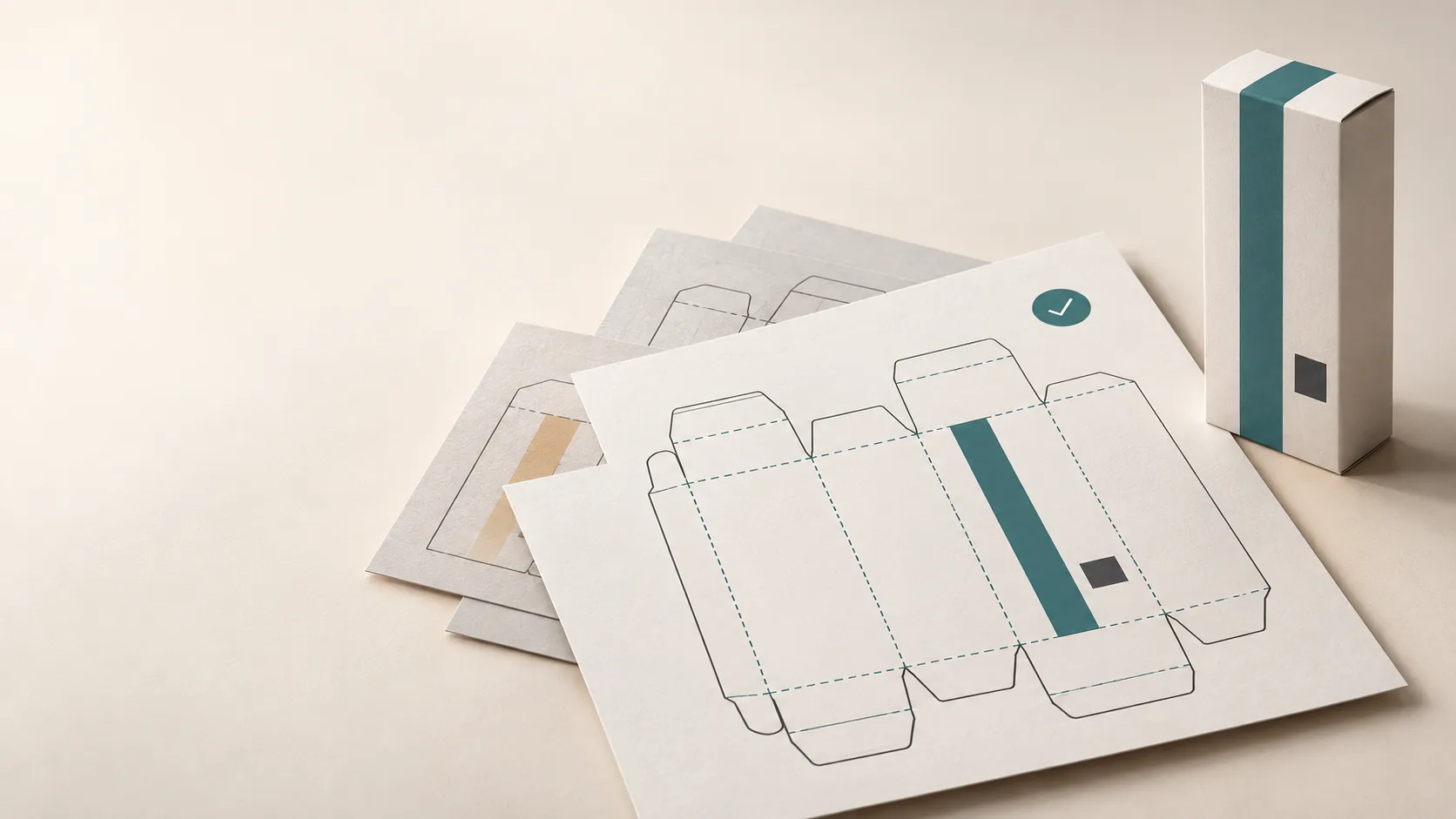



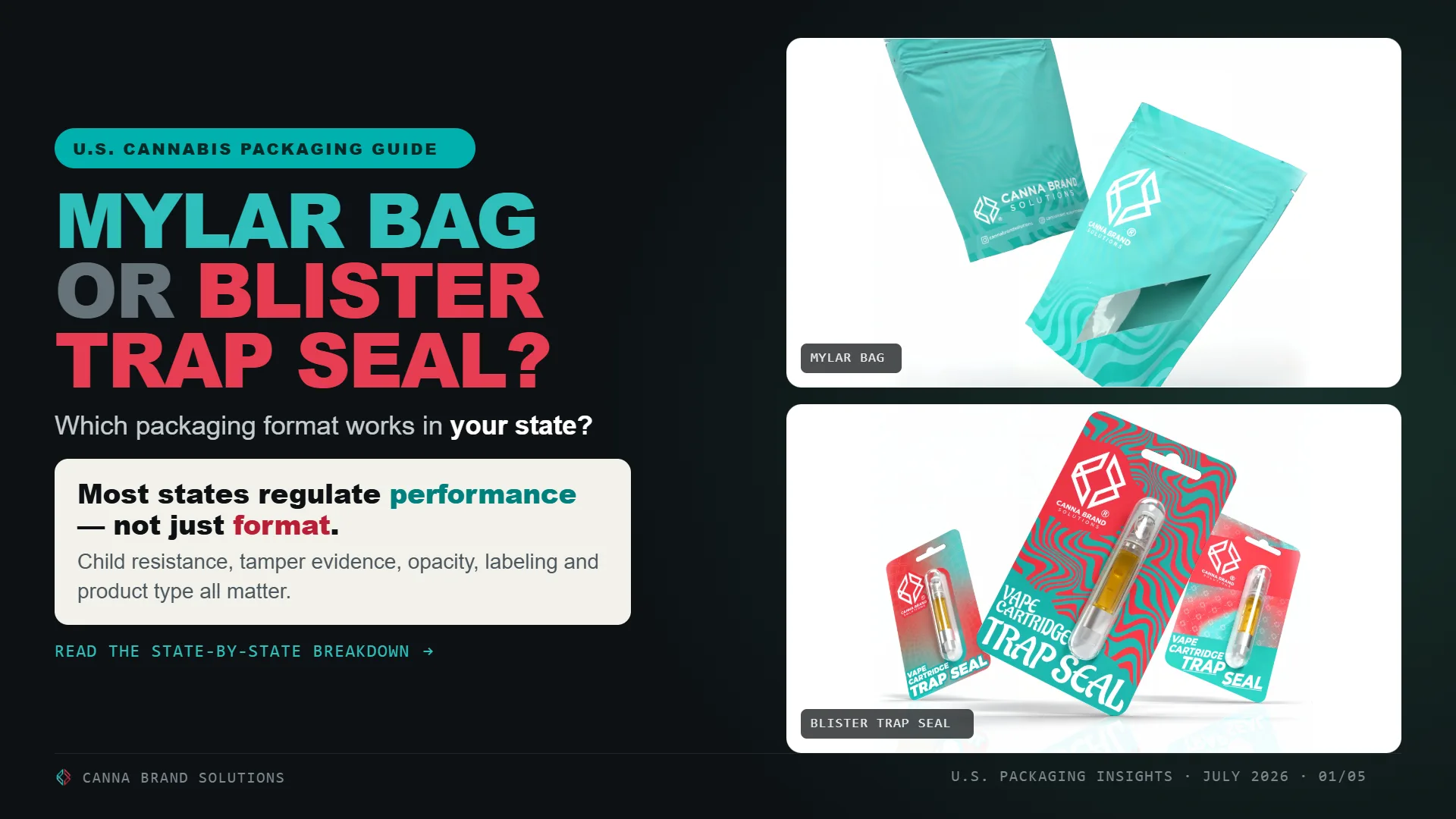

Choosing packaging for a regulated cannabis product involves more than selecting a bag, blister, box, or card that looks good on a retail shelf.
Across the United States, cannabis packaging rules generally focus on how the complete packaging system performs. Depending on the state and product category, regulators may evaluate child resistance, tamper evidence, opacity, light protection, resealability, labeling, and whether the design could appeal to children.
This distinction is especially important when comparing two very different formats:
- Mylar bags used for products such as flower, pre-rolls, and edibles
- Retail blister trap seal packaging used to protect and display vape cartridges, batteries, pods, and related hardware
Neither format is automatically compliant simply because a regulator has referenced or approved a similar package.
What Is Mylar Packaging?
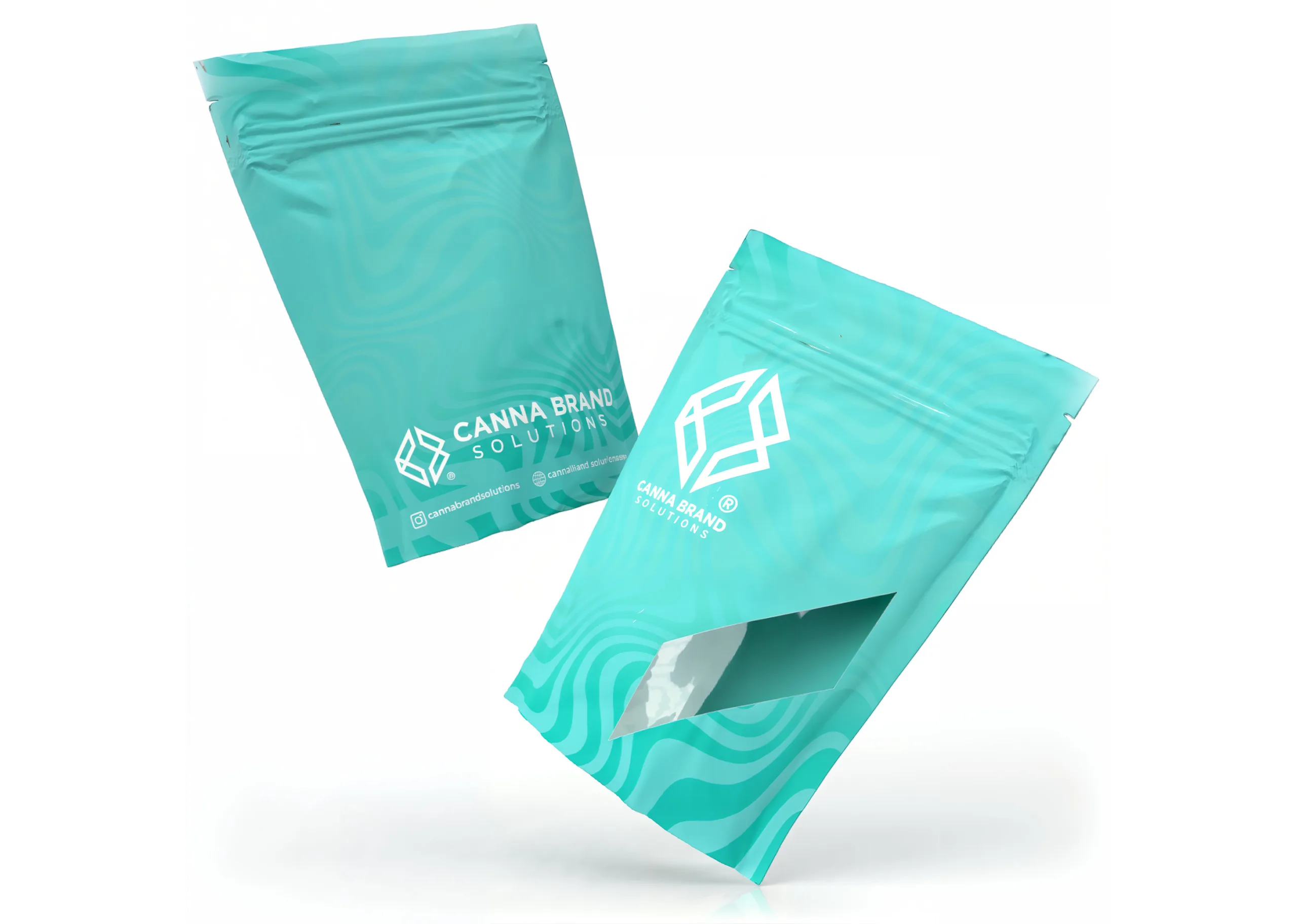
“Mylar” is commonly used in the packaging industry to describe flexible, high-barrier pouches made from laminated film structures.
Depending on the construction, these pouches can provide:
- Moisture protection
- Oxygen protection
- Light resistance
- Odor control
- An opaque exterior
- Resealable closures
- A large printable branding and information area
Mylar bags are commonly considered for flower, pre-rolls, gummies, other edibles, multi-unit products, and dispensary exit packaging.
However, the word “Mylar” does not establish regulatory compliance.
A pouch may still need a certified child-resistant closure, tamper-evident features, an opaque film structure, required warnings, and a resealable mechanism that remains child-resistant throughout repeated use.
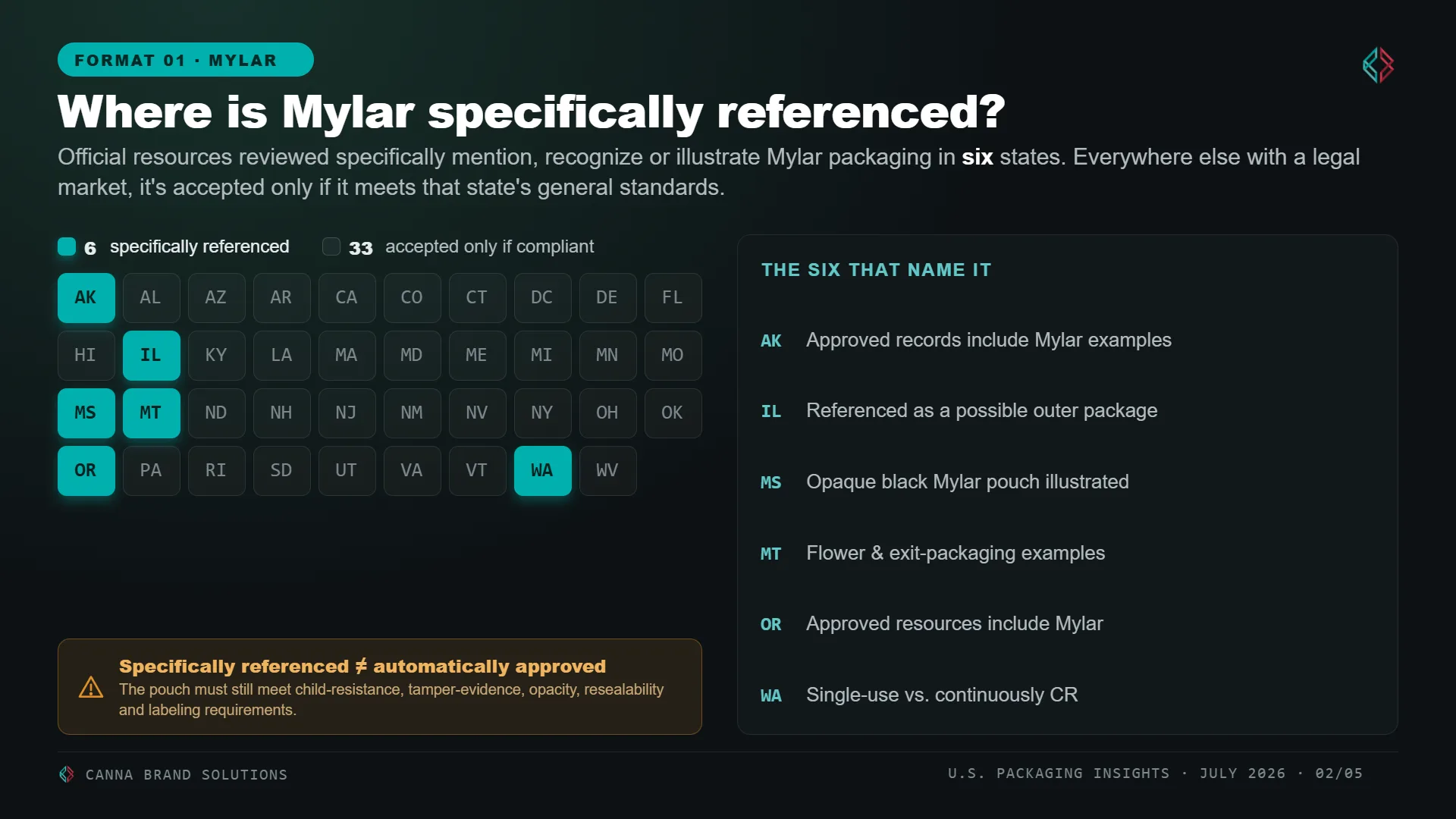
The broader research identified Alaska, Illinois, Mississippi, Montana, Oregon, and Washington as states where official regulations, guidance, or approved packaging resources specifically mention, illustrate, or recognize Mylar-style packaging.
That recognition should not be interpreted as blanket approval for every pouch design.
STATES THAT SPECIFICALLY RECOGNIZE MYLAR PACKAGING
The research identified six states where official regulations, guidance, or approved packaging resources specifically reference or illustrate Mylar packaging:
ALASKA
Status: Mylar specifically recognized
Mylar bags appear in approved cannabis packaging or product records.
Important:
The package may still need to be child-resistant, resealable, and properly labeled. Alaska also requires products to be placed in an opaque package before leaving the retail store unless they are already packaged in an opaque final-sale package.
ILLINOIS
Status: Mylar specifically recognized
State guidance references Mylar as a possible outer packaging format.
Important:
Certain cannabis-infused products may also require individual inner wrapping or packaging.
MISSISSIPPI
Status: Mylar shown in official examples
State guidance illustrates an opaque black Mylar pouch.
Important:
The package must remain child-resistant and must not use designs that appeal to children.
MONTANA
Status: Mylar specifically recognized
State guidance uses Mylar bags as examples for flower and exit packaging.
Important:
Exit packaging may need to be resealable and child-resistant. Warning statements and QR codes may also be required.
OREGON
Status: Mylar specifically recognized
Oregon’s approved packaging resources include Mylar packaging formats.
Important:
The package and label may require Oregon Liquor and Cannabis Commission approval. Child-resistance documents and approved artwork should be kept on file.
WASHINGTON
Status: Mylar specifically recognized
Washington distinguishes between:
- Single-use child-resistant Mylar
- Reclosable, continuously child-resistant Mylar
Unique rule:
A pouch that is compliant for one-time opening may not be compliant for a multi-serving product.
The Mylar findings are summarized in the original state comparison research.
What Is Retail Blister Trap Seal Packaging?
Retail blister trap seal packaging is different from pharmaceutical unit-dose blister packaging.
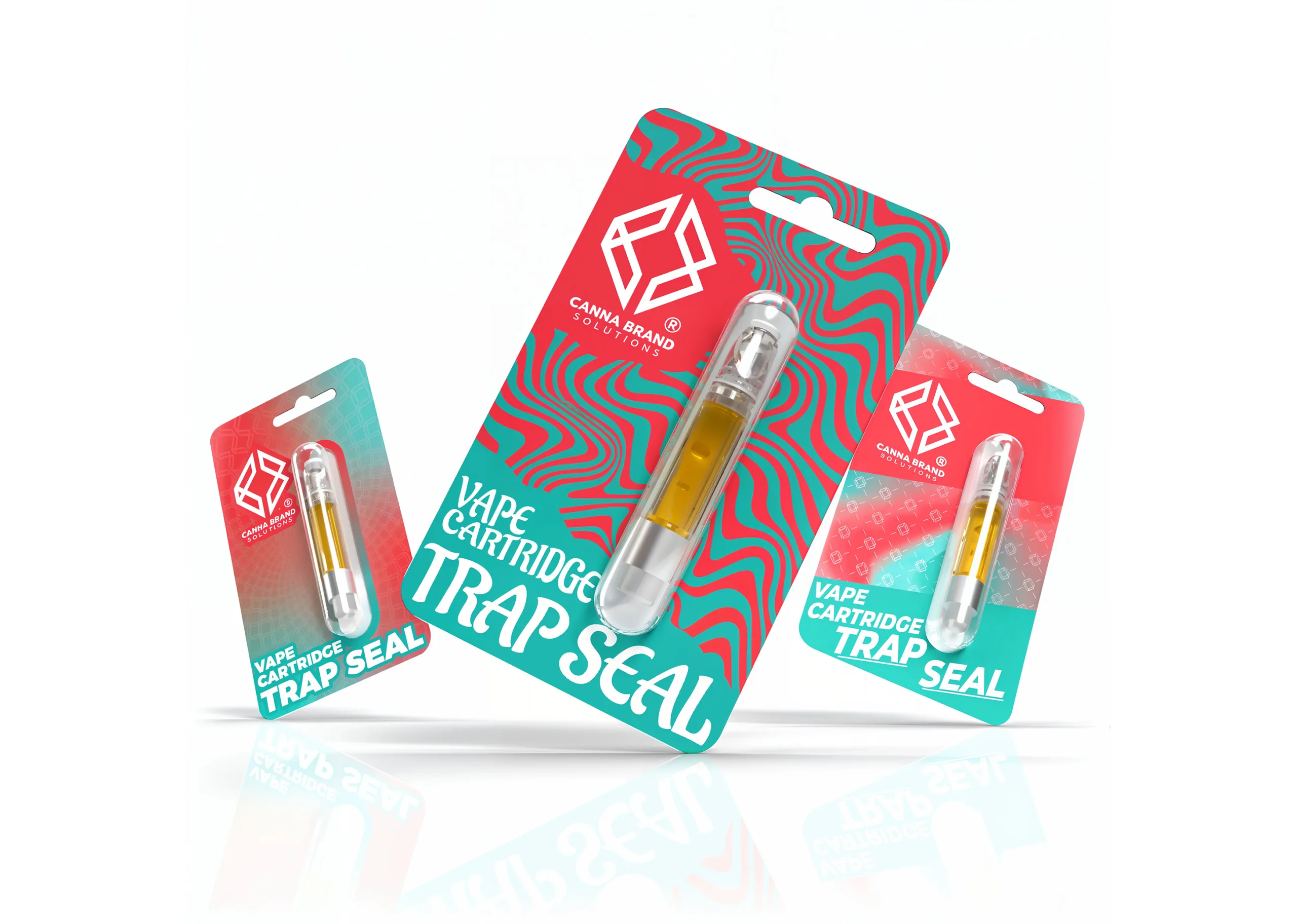
The format discussed here typically includes:
- A printed paperboard card
- A thermoformed plastic blister
- A product secured inside the formed plastic cavity
- A paperboard backing or trapped-card construction
- An optional hang tab for retail display
This format is commonly used to package small hardware items such as cartridges, batteries, pods, applicators, and replacement components.
Retail blister trap seal can offer several commercial and protective benefits:
- Product visibility
- Tamper visibility
- Product immobilization
- Protection from handling
- Space for warnings and instructions
- Strong retail display presentation
A standard battery-style blister trap seal, however, is not automatically child-resistant.
For regulated products, the package may require a specially engineered opening mechanism, destructive opening features, tear resistance, tamper evidence, or an additional child-resistant outer package.
Oregon Provides the Strongest Verified Blister-Style Precedent
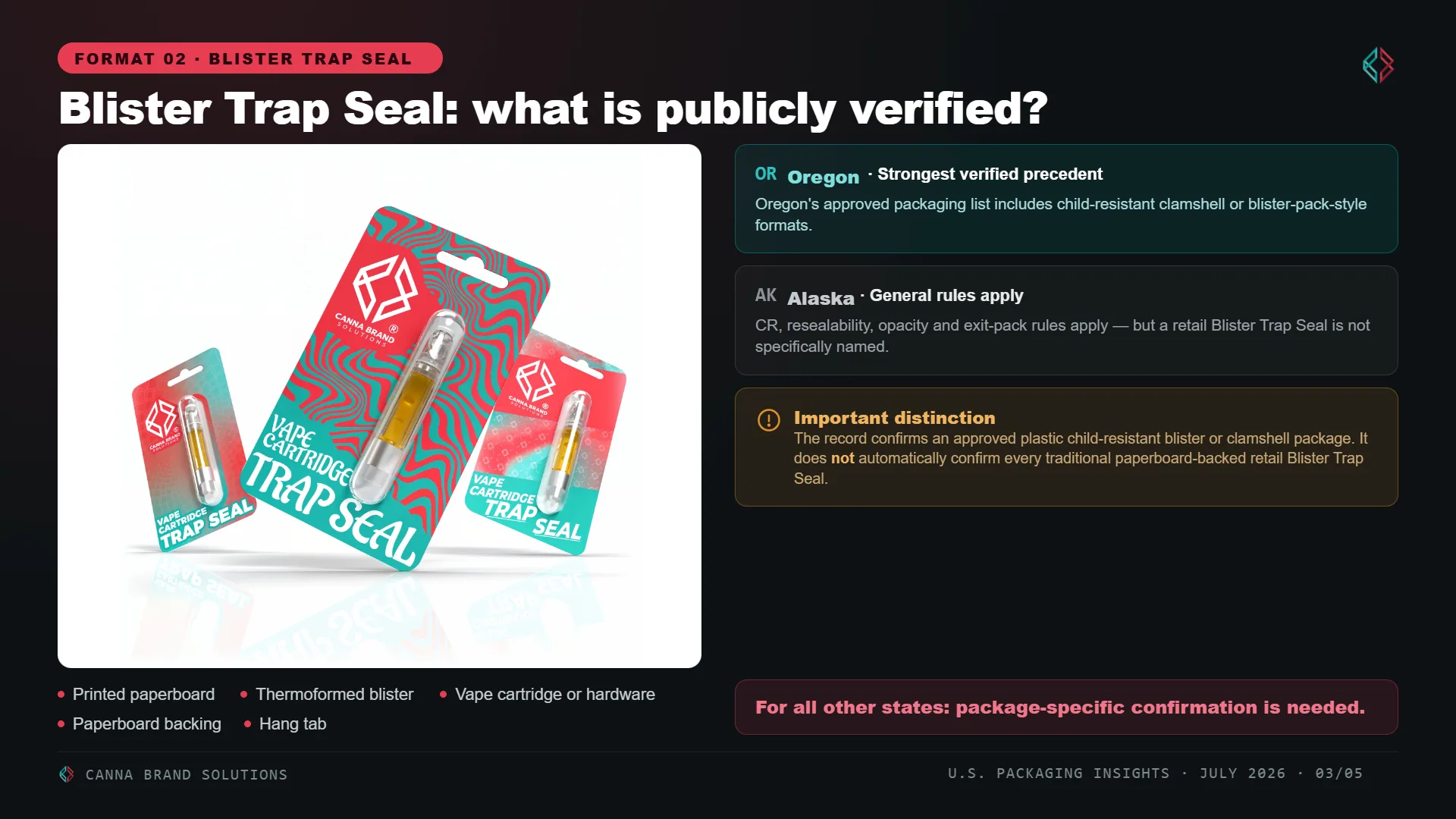
Among the official public materials reviewed, Oregon provides the clearest verified precedent for a child-resistant blister-style package.
The Oregon Liquor and Cannabis Commission’s approved packaging list includes products identified as a “CR Clamshell Blister Pack” and a “Plastic Slide to Open Blister Pack.” The approved list covers resealable and continually child-resistant packages that may be used as primary packaging or as an exit package.
This finding is important, but it has a clear limitation.
The public record confirms approval of a specific plastic, slide-to-open, child-resistant blister or clamshell construction. It does not establish automatic approval for every paperboard-backed or trapped blister trap seal.
Changes to the size, material, opening mechanism, blister shape, backing structure, or labeling could affect whether the package remains within an existing approval.
Oregon also distinguishes the physical package from the label printed on or attached to it. Packages and labels intended for consumer sale generally require review and approval unless the exact package is already included on the approved list. Documentation may include third-party child-resistance certification, photographs, product information, and complete label panels.
Child Resistance Must Apply to the Complete Package
A package should not be described as child-resistant merely because one component appears difficult to open.
The complete package must perform as intended.
In Oregon, child-resistant packaging must be tested and certified under the applicable federal standards by a qualified third-party testing firm. The state distinguishes between:
- Single-use child-resistant packaging
- Resealable and continually child-resistant packaging
A single-use package remains child-resistant only until it is first opened. A continually child-resistant package must maintain its protective function every time it is properly closed.
This distinction can affect both Mylar bags and blister-style packaging.
An ordinary zipper does not automatically make a pouch continually child-resistant. Similarly, a sealed plastic blister does not automatically make a retail card child-resistant.
Primary, Display, and Exit Packaging May Be Treated Differently
Packaging teams should identify exactly which packaging level is being evaluated.
The structure may serve as:
- The immediate or primary package
- A printed retail display package
- A secondary carton or sleeve
- A dispensary exit package
Different requirements may apply to each layer.
Oregon permits a product in a non-child-resistant container to be placed inside an approved child-resistant exit package at the point of sale. The state also requires containers used to display regulated items for ultimate sale to carry the applicable labeling. Outer containers may need full labeling even when information already appears on the inner container.
This means a visible blister trap seal may potentially function as a display package while a separate approved outer package supplies the required child resistance.
The arrangement must still be reviewed against the rules for the specific product.
Alaska Focuses on Performance Rather Than Naming Blister Trap Cards
Alaska’s public regulations reviewed do not specifically identify retail blister trap seal packaging by name.
Instead, the state requires regulated products sold at retail to be placed in resealable, child-resistant packaging. Unless the product is already packaged in an opaque final-sale package, it must be placed inside an opaque package before the purchaser leaves the retail store.
For a transparent blister trap seal, this could mean that an opaque outer or exit package is needed.
The absence of the term “blister trap seal” should not be interpreted as either automatic approval or a complete prohibition. The finished package must be assessed against Alaska’s performance, opacity, and labeling requirements.
Why Product Visibility Can Create Compliance Questions
A key advantage of retail blister trap seal packaging is that buyers can see the cartridge, battery, or hardware inside.
In states that require opaque packaging, that same visibility may create a compliance concern.
Possible design responses may include:
- Increasing paperboard coverage
- Using an opaque blister
- Adding a printed sleeve
- Placing the card inside an opaque carton
- Using a separate compliant exit package
The correct solution depends on whether opacity applies to the primary package, the final retail package, or the exit package.
A clear display should never be assumed acceptable across every market.
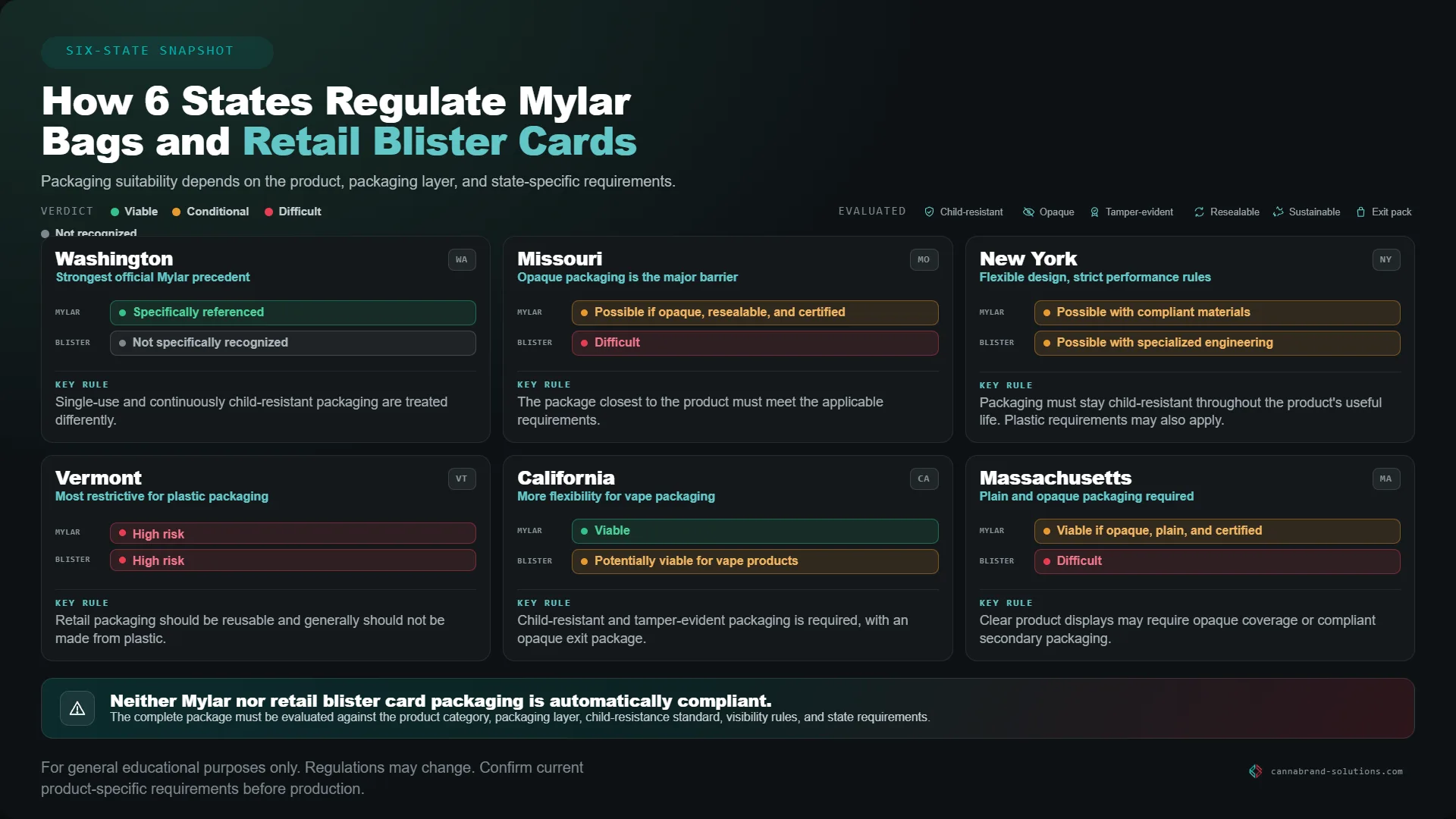
How Six Key States Regulate Mylar Bags and Retail Blister Card Packaging
Cannabis packaging regulations vary significantly across the United States. A package that works in Washington may require major structural changes before it can be sold in Missouri, Vermont, Massachusetts, New York, or California.
For cannabis brands, vape manufacturers, and packaging buyers, the most important distinction is that states usually regulate the performance of the complete packaging system, not simply the material or package name.
A Mylar bag is not automatically compliant because it is resealable or opaque. Likewise, a retail blister card is not automatically compliant because it protects a vape cartridge and provides tamper visibility.
The finished package may still need to satisfy state-specific requirements for:
- Child resistance
- Opacity
- Tamper evidence
- Resealability
- Plastic content
- Product visibility
- Exit packaging
- Label approval
- Youth-appeal restrictions
The following overview summarizes how Washington, Missouri, New York, Vermont, California, and Massachusetts approach Mylar cannabis packaging and retail blister card packaging for vape cartridges, pods, batteries, and related cannabis hardware.
Washington: The Clearest Official Reference to Mylar Packaging
Washington is the only state in this six-state group where official guidance specifically illustrates and names Mylar packaging.
The Washington State Liquor and Cannabis Board’s packaging guide shows both:
- A standard Mylar bag intended for single use
- A multi-use, child-resistant Mylar bag
This distinction matters because a pouch that is compliant for a single opening may not be suitable for a product that consumers open and close repeatedly.
Washington’s rules require cannabis concentrates and edibles to use child-resistant packaging that meets federal poison-prevention standards or certain qualifying heat-sealed plastic formats. Liquid multi-serving edibles also require a resealable closure.
For cannabis vape cartridge packaging, Washington does not impose a broad opacity requirement in the packaging rules reviewed. However, a retail blister card containing a filled cartridge would still need to function as a compliant primary package.
A standard paperboard-backed blister card may not meet the state’s child-resistance requirements unless the blister-card system itself is properly engineered and tested.
Packaging takeaway: Mylar packaging has a clear official precedent in Washington. Retail blister card packaging is not specifically recognized and should be evaluated against the state’s child-resistant primary-packaging rules.
Missouri: Opaque, Resealable, and Certified Child-Resistant
Missouri has one of the most restrictive packaging frameworks in this group.
Cannabis product packaging generally must be:
- Opaque
- Resealable
- Certified child-resistant
Missouri also specifies that when a product uses multiple packaging layers, the container closest to the product must meet the applicable packaging requirements.
This rule is especially important for retail blister card packaging.
If a thermoformed plastic blister is the layer directly surrounding a vape cartridge, the blister itself may need to be opaque, resealable, and certified as child-resistant. A decorative paperboard backing does not correct a noncompliant inner package.
Missouri also operates an item-approval process for cannabis products, labels, and packaging designs. Approved items receive an approval number that must appear on the product label.
A child-resistant Mylar pouch may be possible when it is opaque, resealable, properly certified, and approved. A conventional clear blister card is significantly more difficult because it is usually transparent and not resealable.
Packaging takeaway: Missouri is favorable to certified opaque Mylar packaging but generally unfavorable to conventional visible-window blister card designs.
New York: Child-Resistant for the Useful Life of the Product
New York regulates cannabis packaging through detailed performance and sustainability standards.
A retail cannabis package must generally:
- Remain child-resistant throughout the useful life of the product
- Be tamper-evident
- Fully enclose the product
- Be resealable when it contains more than one serving
Licensees must also maintain documentation demonstrating compliance with federal child-resistant packaging standards.
Unlike Missouri and Massachusetts, New York does not impose a universal opacity requirement on every cannabis product package. This creates more potential flexibility for retail packaging that displays a product.
However, New York also restricts plastic cannabis packaging. Plastic components generally must contain at least 25% post-consumer recycled material unless a specific exception applies.
This sustainability rule can directly affect both Mylar pouches and thermoformed blister packaging.
New York distinguishes between the retail package, inner wrapping, marketing layer, non-consumer package, and optional exit package. Because the exit package is optional, the core compliance responsibility generally remains with the retail package itself.
A Mylar pouch may be suitable when it meets the child-resistance, tamper-evidence, enclosure, and recycled-plastic requirements.
A retail blister card may also be possible in theory, but the complete blister-card assembly must function as a compliant child-resistant and tamper-evident retail package. A standard display blister would not be sufficient.
Packaging takeaway: New York provides design flexibility on opacity, but child-resistance, tamper evidence, full enclosure, and recycled-plastic requirements create a high technical standard.
Vermont: Plastic Retail Packaging Faces Significant Restrictions
Vermont presents one of the most challenging environments for both Mylar bags and plastic blister cards.
Official Vermont guidance states that packaging intended for consumer purchase at a retail location should be reusable and should not be made of plastic.
This creates an immediate concern for:
- Conventional multilayer Mylar pouches
- Thermoformed plastic blister cards
- Other single-use plastic retail packaging
Vermont also distinguishes between child-resistant packaging and child-deterrent packaging.
Cannabis products are generally associated with opaque, child-resistant packaging requirements, while cannabis flower sold at retail may be treated differently under child-deterrent packaging rules.
For filled vape cartridges and other manufactured cannabis products, opacity and child resistance are major considerations. A clear blister card is therefore a poor fit unless the design receives direct regulator confirmation or uses a substantially different material and construction.
Vermont updated parts of its cannabis packaging framework through Act 166 in 2024. In 2026, lawmakers considered increasing certain package THC limits, but the relevant packaging-limit proposal was removed from the later legislative version reviewed.
Packaging takeaway: Vermont is the least favorable state in this group for conventional plastic Mylar bags and retail blister card packaging.
California: More Flexibility for Vape Cartridges, but Child Resistance Still Applies
California regulates cannabis packaging according to product type and child-resistance duration.
All cannabis goods sold at retail must use child-resistant packaging.
California recognizes several child-resistant pathways, including:
- Packages certified to federal child-resistant standards
- Certain qualifying single-serving containers
- Heat-sealed plastic packaging that meets minimum thickness and opening requirements
Edibles, orally consumed concentrates, and suppositories generally require child resistance for the life of the product.
Vape cartridges, flower, pre-rolls, and certain inhalable products may use single-use child-resistant packaging when the package carries the required warning that it is no longer child-resistant after opening.
California requires cannabis packaging to be tamper-evident and resealable when the package contains more than one serving.
Opacity is required for edible cannabis products, but California does not apply the same blanket opacity rule to vape cartridges and other inhalables.
This gives retail blister card packaging more theoretical room in California than in Missouri, Vermont, or Massachusetts. However, a standard paperboard-backed blister card still needs a compliant child-resistant and tamper-evident opening system.
California also requires cannabis goods to leave the retailer inside an opaque exit package.
A child-resistant Mylar pouch remains a practical option when it follows one of California’s accepted child-resistant pathways. A blister card for a vape cartridge may be possible, but it must perform as a compliant package rather than functioning only as a retail display.
Packaging takeaway: California offers more flexibility for visible vape cartridge packaging, but child resistance, tamper evidence, and opaque exit packaging still apply.
Massachusetts: Opaque and Plain Packaging Creates a Barrier to Clear Blisters
Massachusetts generally requires marijuana products to use packaging that is:
- Child-resistant
- Opaque
- Plain in design
- Resealable when used for multiple servings or repeated use
Child-resistant packaging must be certified to the current federal poison-prevention standards.
Massachusetts regulations include a limited fallback when direct child-resistant packaging is considered “unreasonably impracticable” for a specific product. In that situation, the product may need to be placed inside a compliant child-resistant exit package.
This exception should not be treated as a general pathway for ordinary retail blister cards.
The state’s opacity and plain-design requirements create a major challenge for clear thermoformed blister packaging. A visible vape cartridge displayed behind clear plastic may conflict with the direct-package requirements unless the product is covered by an opaque outer structure or follows a defensible exit-package pathway.
An opaque, plain, certified child-resistant Mylar pouch is generally easier to align with Massachusetts requirements than a conventional blister card.
Massachusetts has also issued several updated versions of its adult-use cannabis regulations, including versions effective in November 2024, January 2026, and June 2026.
Packaging takeaway: Massachusetts is favorable to opaque, certified child-resistant Mylar packaging but highly restrictive for visible retail blister card designs.
Questions to Review Before Production
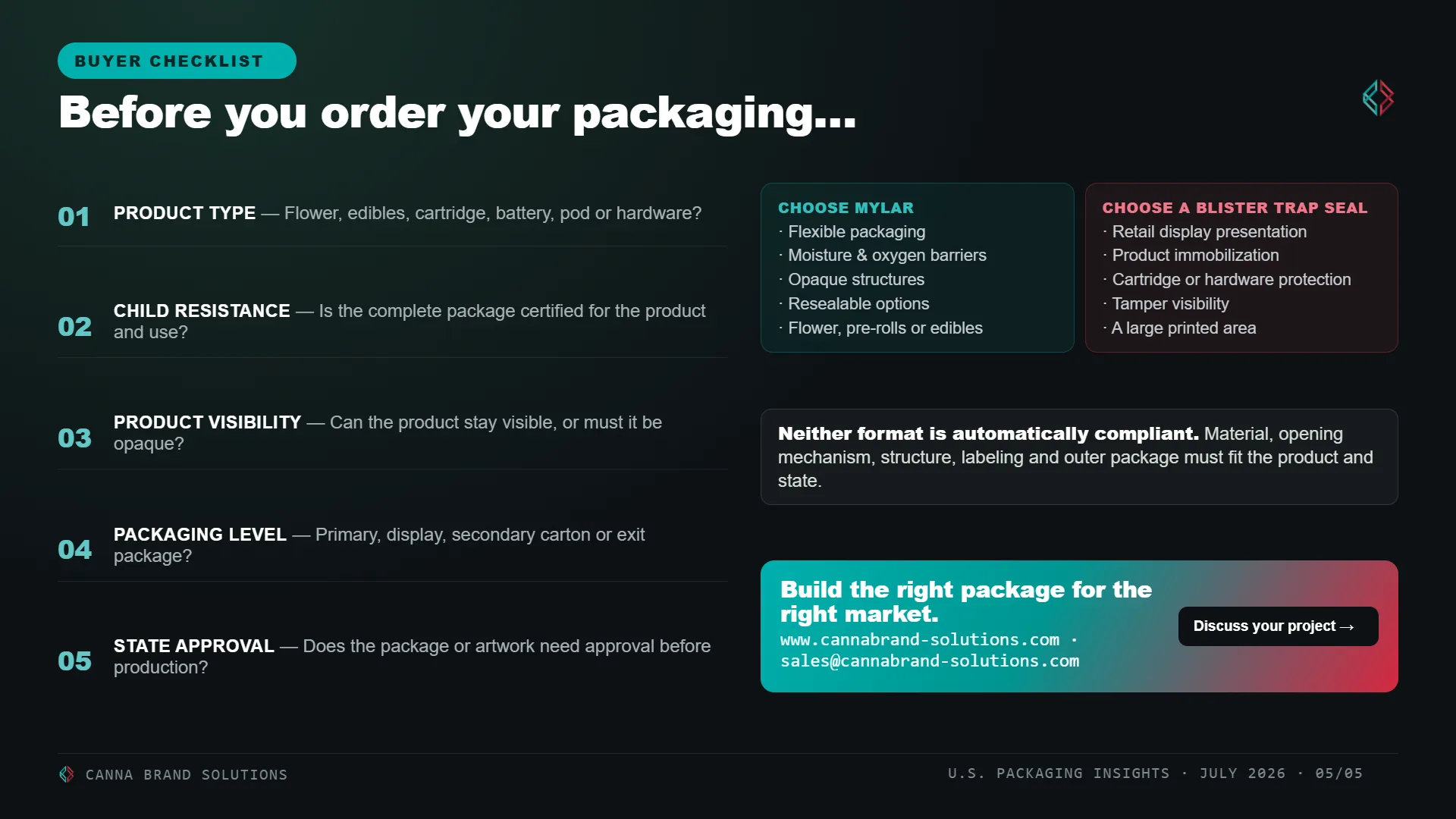
Before approving artwork or beginning a commercial production run, packaging teams should confirm:
- What specific product will the package contain?
- Which state or states will receive the product?
- Is child-resistant certification required for the primary package?
- Must the package remain child-resistant after repeated opening?
- Is a clear or transparent display permitted?
- Does the product require opaque or light-resistant protection?
- Is the blister trap seal the primary package, display package, or secondary package?
- Is a separate exit package required?
- Must the package or label receive regulatory approval?
- Do changes in dimensions, materials, or opening mechanisms require a new approval?
Final Takeaway
The most accurate compliance question is not:
“Does this state allow Mylar bags or blister trap seals?”
A better question is:
“Does this complete packaging system meet the requirements for this product in this state?”
Mylar is specifically recognized in several state resources, but each pouch must still meet the applicable performance and labeling requirements.
Oregon provides a verified precedent for an approved child-resistant blister-style package, but that precedent should not be presented as automatic approval for every traditional paperboard-backed retail blister trap seal.
For other states, retail blister trap seals should generally be classified as:
Not specifically named—general packaging rules and package-specific confirmation apply.
Cannabis packaging regulations change frequently. Packaging suitability should be verified against current regulations and the intended product category before artwork approval or commercial production.
This article is for general educational purposes and does not constitute legal advice.